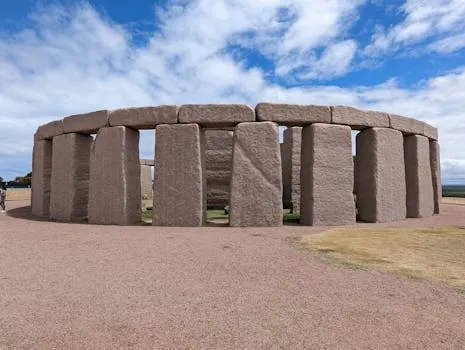
Archaeologists have documented dozens of ancient, large-scale stone circles in the Golan Heights region of northern Israel. These structures, often compared to Stonehenge for their monumental scale, are known locally as 'Rujm el-Hiri' or Gilgal Refaim.
The sites consist of massive circles, some exceeding 150 meters in diameter, built from local basalt stones. Recent research, including aerial surveys and fieldwork, has confirmed the existence of numerous such complexes. They are believed to have been constructed during the Early Bronze Age, around 3000 to 2700 BCE, predating many other famous megalithic sites.
The function of these circles remains a subject of debate among scholars. Leading theories suggest they served as ceremonial centers, astronomical observatories for tracking solstices, or enclosures for social or ritual gatherings. Their precise alignment with celestial events points to sophisticated knowledge by the builders.
Unlike the standing stones of Stonehenge, many of the Israeli structures are low concentric circles of piled stone. The discovery and ongoing study of these sites are reshaping understanding of the region's prehistoric cultures and their architectural capabilities.