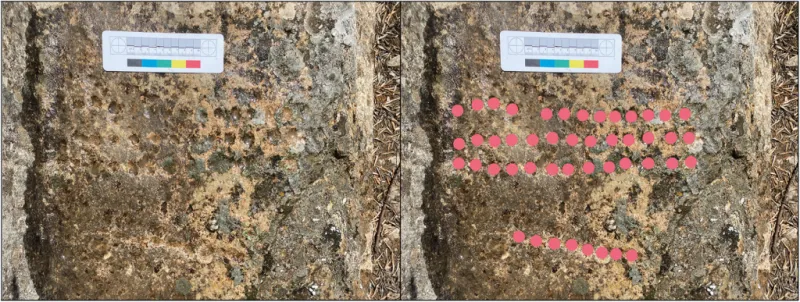
Archaeologists have discovered a stone game board carved into the ancient site of Volubilis (Walili) in Morocco, which may represent one of the earliest known examples of a game still played today in parts of North Africa and the Middle East. The board, etched into a rock surface, features rows of holes or pits, characteristic of the mancala family of games.
According to a study published in the journal Antiquity on June 8, 2026, the board dates to the 7th or 8th century CE, during the early Islamic period. This makes it one of the oldest mancala boards ever found in the region. Mancala games involve moving seeds or stones between pits and are still widely played in Africa and the Middle East.
The discovery was made by a team from the University of Cambridge and the Moroccan National Institute of Archaeology and Heritage Sciences. The board is located near the remains of a medieval house, suggesting the game was a common pastime for residents of the city.
Volubilis, a UNESCO World Heritage site, was a major Roman city in North Africa and later an Islamic settlement. The find provides new insight into the daily life and leisure activities of people in medieval Morocco.