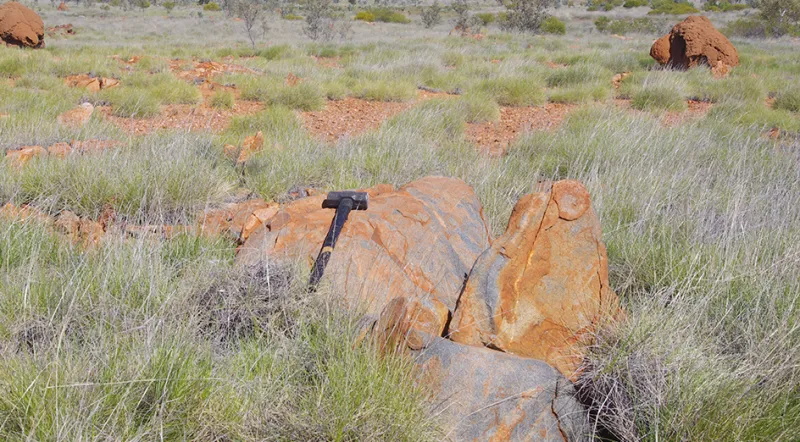
An international team of researchers has gained new insight into the formation of Earth's ancient continents by analyzing minerals from the Pilbara region of Western Australia, dating back 3.5 billion years. The study, led by Professor Tony Kemp from The University of Western Australia, focuses on zircon crystals that provide a record of early crustal processes.
The Pilbara Craton is one of the best-preserved pieces of ancient continental crust on Earth. By examining the isotopic composition of zircons, the team found evidence that the continental crust formed through repeated melting and reworking of older rocks, rather than through a single event. This challenges previous models that suggested a more straightforward formation process.
According to the research published in the journal Nature Geoscience, the findings indicate that the early Earth's crust was dynamic and underwent multiple cycles of melting and solidification. This process helped stabilize the first continents, which eventually led to the development of plate tectonics.
Professor Kemp stated, 'These zircons are like time capsules that preserve the chemical signatures of the environments in which they formed. They show us that the early Earth was a much more active place than we previously thought.' The study provides a clearer picture of how the planet's surface evolved from a molten state to the stable continents we see today.