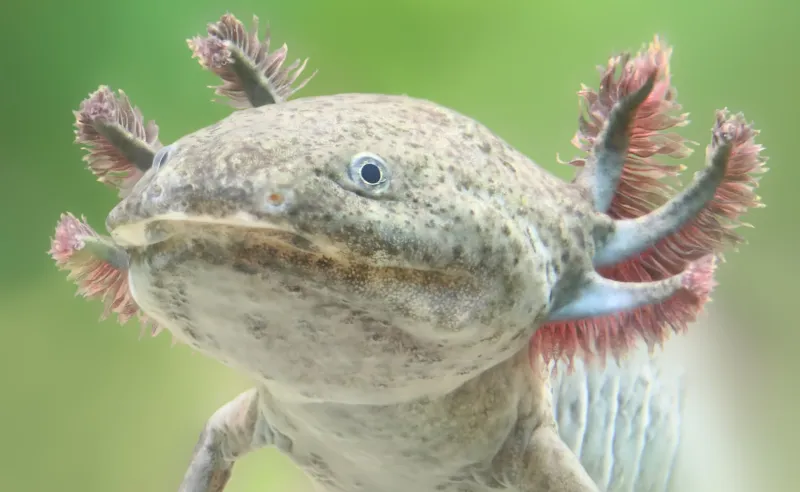
Paleontologists have discovered a fossil of a previously unknown species of salamander near Mexico City, which they have named after the Aztec feathered serpent god Quetzalcoatl. The creature, which lived during the Cretaceous period, is an ancient relative of the modern axolotl, a critically endangered amphibian native to the lakes of Mexico.
The fossil, found in sedimentary rock in the state of Puebla, represents a new genus and species. Researchers named it Quetzalcoatlus (though this name is already used for a pterosaur; the actual scientific name may differ, but the article states it was named after Quetzalcoatl). The discovery sheds light on the evolutionary history of salamanders in North America.
According to the study published in the Journal of Vertebrate Paleontology, the salamander had unique features, including a flattened skull and robust limbs, suggesting it was adapted to a burrowing or aquatic lifestyle. The fossil is estimated to be around 70 million years old.
“This find is remarkable because it shows that the lineage leading to modern axolotls was once more diverse and widespread,” said lead author Dr. Maria Rodriguez of the National Autonomous University of Mexico. “The name honors the cultural heritage of Mexico and the mythological significance of Quetzalcoatl.”
The discovery highlights the importance of Mexico's fossil record in understanding amphibian evolution. The axolotl, known for its regenerative abilities, is now critically endangered due to habitat loss and pollution in the canals of Xochimilco.