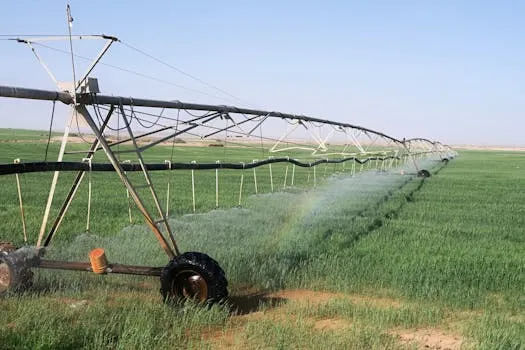
Algeria has achieved a significant milestone in agricultural water management, with over 366,000 hectares of farmland converted to localized irrigation systems as of early 2026. This initiative aims to enhance water efficiency and boost crop yields in the face of increasing water scarcity.
The conversion program, supported by the Ministry of Agriculture and Rural Development, targets a total of 500,000 hectares by the end of the decade. Localized irrigation, including drip and sprinkler systems, can reduce water usage by up to 50% compared to traditional flood irrigation.
Farmers in arid and semi-arid regions, particularly in the south and high plateaus, have been the primary beneficiaries. The government provides subsidies covering 50-100% of the installation costs, depending on the farm size and location.
This effort is part of Algeria's broader strategy to modernize agriculture and ensure food security, especially for strategic crops like cereals and vegetables. The conversion also helps mitigate the impacts of drought, which has become more frequent due to climate change.