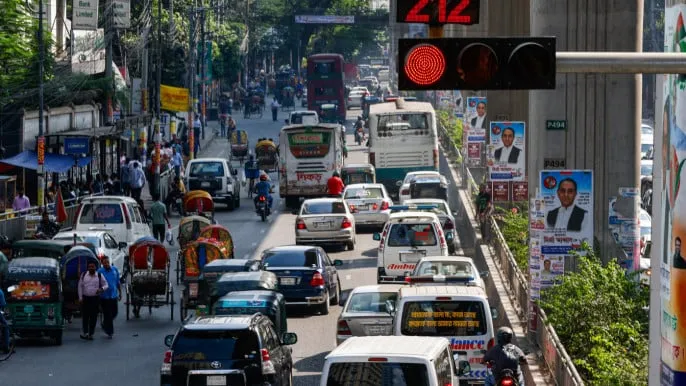
An artificial intelligence-based traffic management system has shown early success in reducing congestion in Dhaka, Bangladesh, according to a pilot project concluded in June 2026. The system, developed by a local tech startup in partnership with the Dhaka Metropolitan Police, uses real-time camera feeds and machine learning to optimize traffic light timings.
During a three-month trial on 10 major intersections, the AI system reduced average vehicle wait times by 12% and cut overall congestion by 15%, as reported by the Dhaka Transport Coordination Authority on June 20, 2026. The project covered key routes including Mirpur Road and Gulshan Avenue.
Officials caution that the system is not a complete solution. Dhaka remains one of the world's most congested cities, with over 20 million residents and rapid vehicle growth. The AI pilot is part of a broader $500 million urban mobility plan funded by the World Bank.
Plans are underway to expand the AI system to 50 additional intersections by the end of 2027, pending further data analysis and budget approval. The technology is also being considered for integration with the city's new metro rail network.


