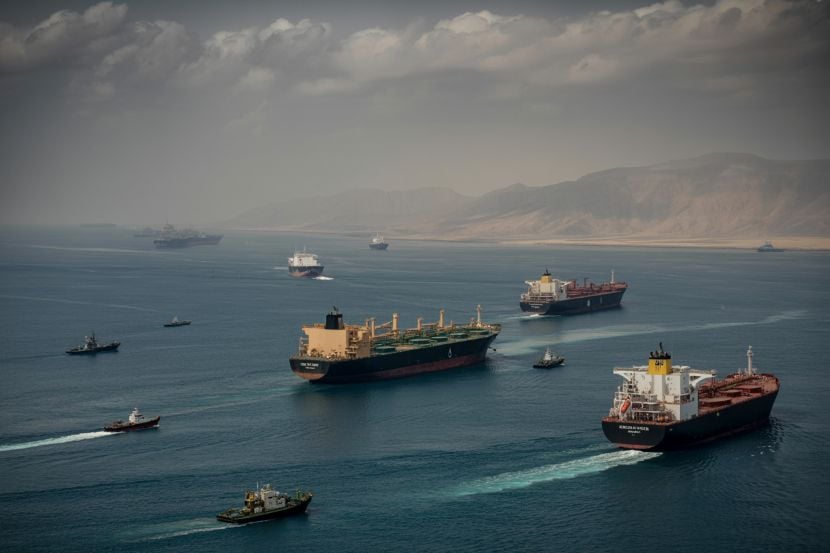
Heightened military tensions in the Middle East, particularly around the Strait of Hormuz, are raising significant concerns among economists and policymakers about a potential spike in global inflation. The strait is a critical maritime chokepoint through which about 20-21% of global petroleum liquids consumption passed in 2023, according to the U.S. Energy Information Administration. Any serious disruption to shipping in this narrow waterway could severely constrain global oil supplies.
The immediate trigger for the current risk assessment is the ongoing conflict between Israel and Hamas, and the involvement of Iran-backed Houthi rebels in Yemen, who have attacked commercial shipping in the Red Sea. While these attacks have not directly targeted the Strait of Hormuz, analysts warn that a direct confrontation between Iran and Israel or the United States could easily spill over into the Persian Gulf. Iran has repeatedly threatened to close the strait in the past during periods of heightened tension.
Such a supply shock would reverse recent progress on inflation in many developed economies. Central banks, including the U.S. Federal Reserve, which have been cautiously considering interest rate cuts after a prolonged tightening cycle, would face renewed pressure. Higher energy prices act as a tax on consumers and increase costs for businesses across the transportation and manufacturing sectors, potentially stalling economic growth.
The political implications are acute in the United States, where cost-of-living concerns are a top issue for voters. An inflationary surge driven by geopolitical instability would present a major challenge for any administration, complicating economic policy and campaign messaging ahead of the 2026 midterm elections. Both Democratic and Republican strategists acknowledge that external shocks from foreign conflicts are largely outside domestic political control but have immediate electoral consequences.