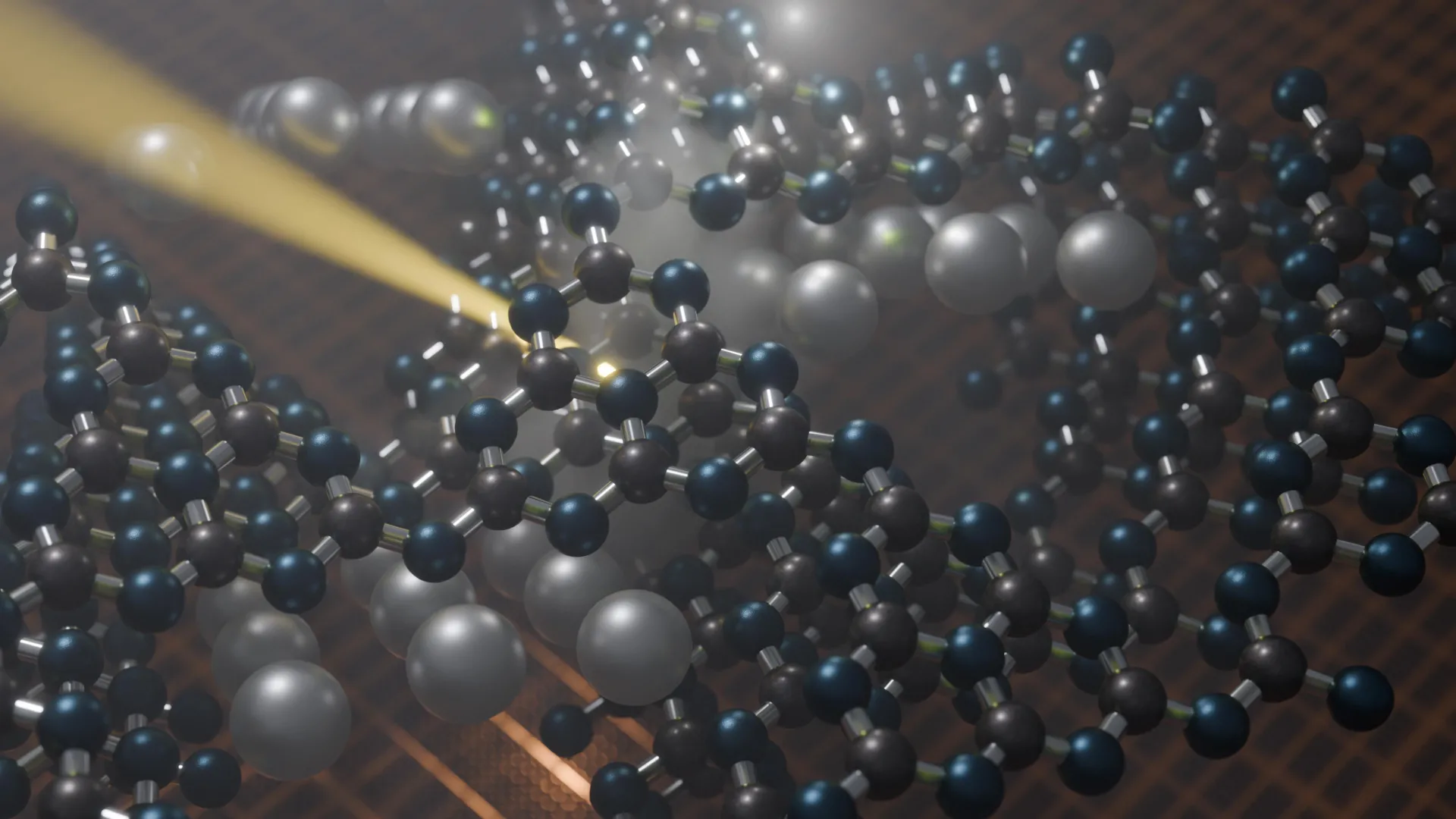
Researchers at the Center for Advanced Systems Understanding (CASUS) at Helmholtz-Zentrum Dresden-Rossendorf (HZDR) have developed a new theoretical method to model and optimize the process of converting sunlight into fuel. The work focuses on improving the efficiency of photoelectrochemical cells, which use solar energy to split water into hydrogen and oxygen.
The team's approach uses advanced computational simulations to predict the behavior of materials at the atomic level during the water-splitting reaction. This method aims to identify the most promising catalyst materials for producing hydrogen fuel, a clean energy carrier, from sunlight and water more efficiently and cost-effectively.
According to the researchers, this theoretical framework is designed to be reliable and reproducible, providing a valuable tool for guiding future experimental work. The goal is to accelerate the development of practical solar fuel technologies, which are crucial for storing renewable energy and decarbonizing sectors like transportation and industry.
The research, published in the journal Physical Review Research, represents a step forward in the computational design of energy materials. It does not, however, report a new physical device or a breakthrough in immediate fuel production efficiency, but rather a refined modeling technique to aid in that development.