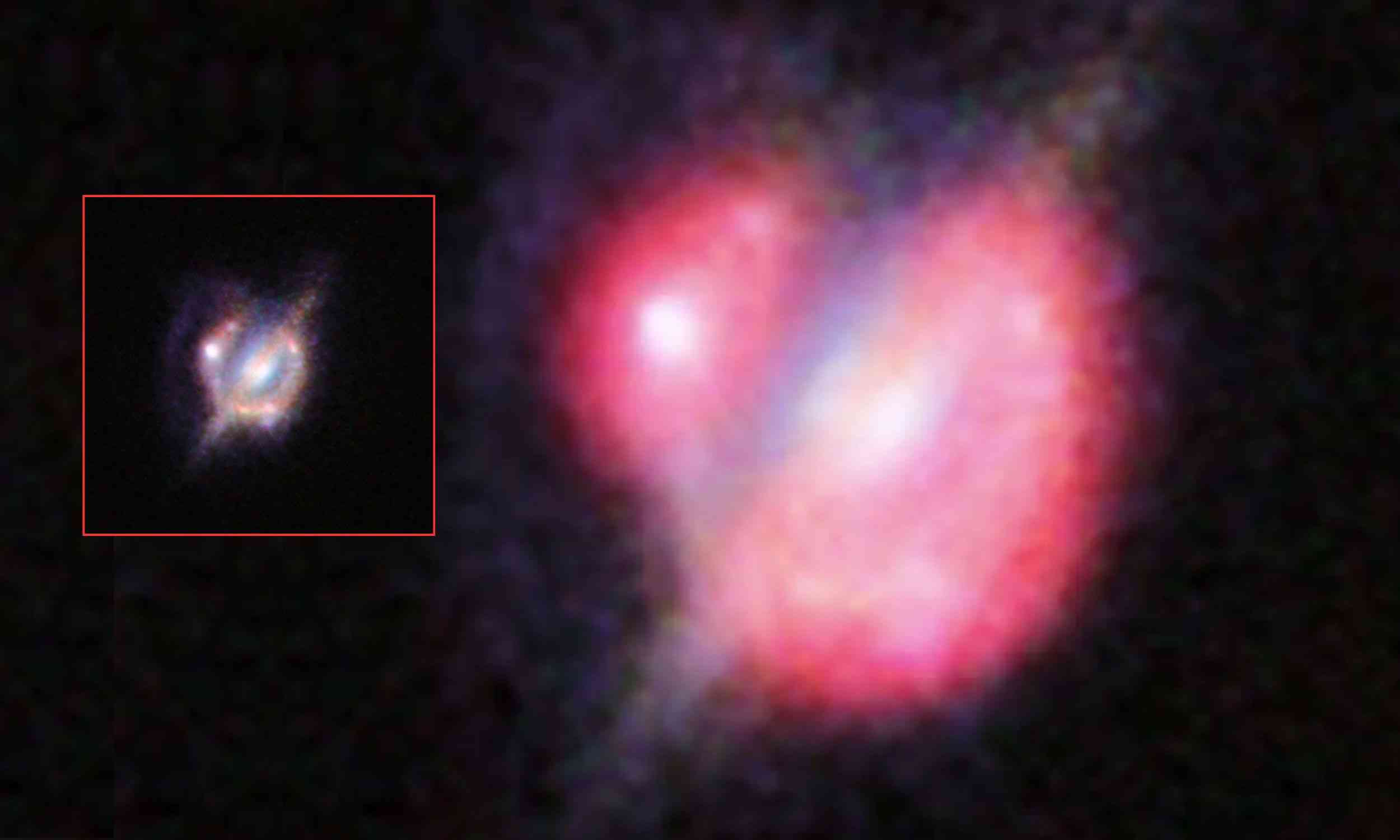
Astronomers using the South African MeerKAT radio telescope have detected the most distant hydroxyl megamaser ever observed. The powerful microwave laser emission originates from a pair of colliding galaxies approximately 5 billion light-years from Earth.
The discovery, led by researchers from the International Centre for Radio Astronomy Research (ICRAR), was published in the Astrophysical Journal Letters. The megamaser, nicknamed 'Nkalakatha', was found in data from the first night of a survey involving over 3,000 hours of observations.
Megamasers are naturally occurring, amplified microwave emissions, often generated by the intense energy of galaxy mergers. The hydroxyl molecules in the turbulent gas of the colliding galaxies are stimulated to emit coherent radiation, creating a bright, laser-like signal that can be detected across vast cosmic distances.
The detection of such a distant megamaser provides astronomers with a valuable tool for studying the dynamics of galaxy collisions and the conditions in the early universe. It confirms that these violent cosmic events can produce extraordinarily powerful and detectable beams of radiation.