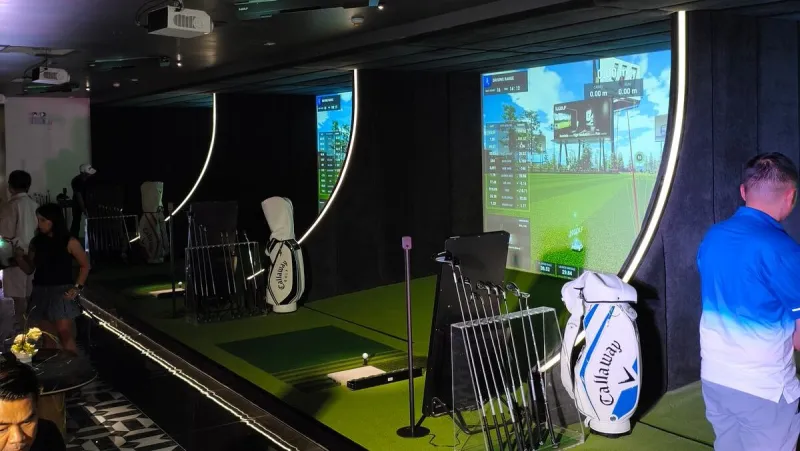
Golf has long been seen as a sport requiring significant time and money. However, the rise of indoor golf simulators is changing that perception. These systems allow players to practice or play a full round without leaving home, using a screen, projector, and sensors to track ball flight.
According to industry reports, the global golf simulator market was valued at approximately $1.5 billion in 2025 and is projected to grow at a compound annual growth rate (CAGR) of 8-10% through 2030. Entry-level simulators from brands like OptiShot and SkyTrak start under $1,000, while high-end models from Full Swing and TrackMan can exceed $20,000.
Virtual golf also reduces the time commitment. A typical 18-hole round on a simulator takes about 1-2 hours, compared to 4-5 hours on a real course. This convenience has attracted busy professionals and younger players, with a 2025 survey by the National Golf Foundation showing that 40% of new golfers in the U.S. first tried the sport via a simulator.
While some purists argue that simulators lack the physical and social aspects of outdoor golf, proponents highlight the ability to play year-round, regardless of weather. Many golf courses and driving ranges now offer simulator bays for practice and entertainment.