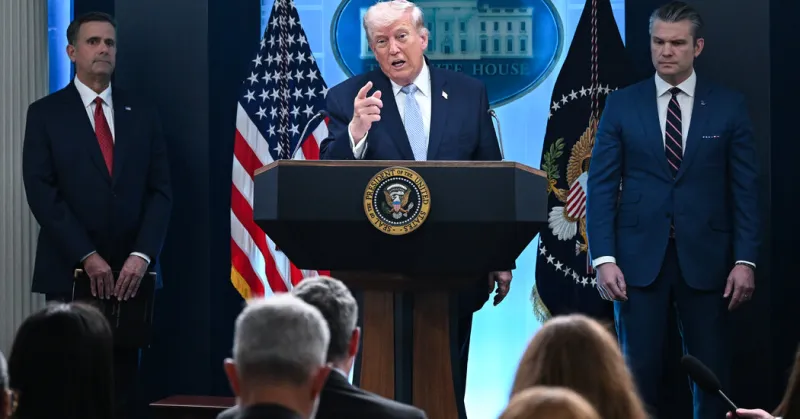
Tensions between the United States and Iran have escalated in April 2026, with President Donald Trump issuing sharp warnings to Tehran over any potential disruption to shipping through the Strait of Hormuz, a critical chokepoint through which a significant share of the world's oil supply passes. Trump's remarks came amid broader diplomatic efforts to reach a new nuclear agreement with Iran, negotiations that remain highly uncertain.
Vice President JD Vance has also weighed in, cautioning Iran against attempting to exploit or delay the ongoing diplomatic process. Vance's comments underscored the administration's position that military and economic pressure would remain on the table if talks stalled or if Iran took provocative steps in the region.
Diplomatic activity in the broader Middle East remains intense. Discussions involving Lebanon, where a fragile ceasefire has been in place following the 2024 conflict between Israel and Hezbollah, continue to be a point of contention in any wider regional peace framework. Iranian-aligned factions have linked progress on various fronts to conditions on the ground in Lebanon.
The situation in the region remains fluid, with multiple parties — including the United States, Iran, Israel, and Gulf states — engaged in overlapping and sometimes contradictory diplomatic tracks. Analysts caution that the risk of miscalculation remains high, particularly given the sensitivity of the Strait of Hormuz to global energy markets.