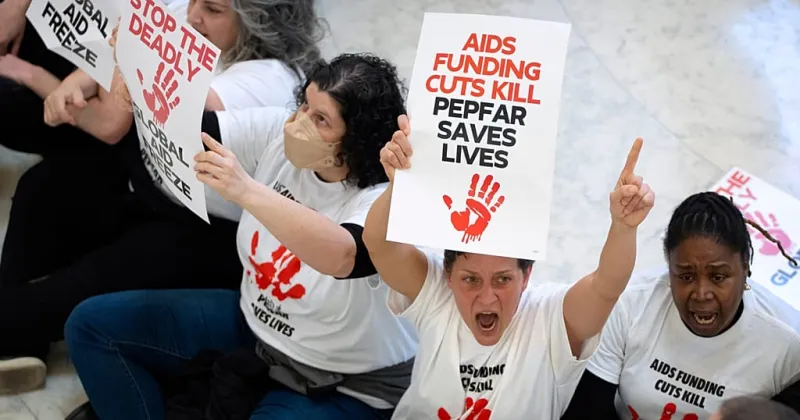
UNAIDS warned Monday that global funding cuts, growing inequality and setbacks to human rights are threatening decades of progress in the fight against HIV/AIDS. The warning came with the launch of the 'United to End AIDS' report in Rio de Janeiro.
The report, released ahead of the 25th International AIDS Conference in Munich, highlights that while new HIV infections have fallen by 60% since the peak in 1995, the pace of decline has slowed. In 2025, an estimated 1.3 million people were newly infected with HIV, and 630,000 died from AIDS-related illnesses.
UNAIDS Executive Director Winnie Byanyima stated: 'We have the tools to end AIDS by 2030, but only if we protect the rights of everyone and fully fund the response.' The report notes that international funding for HIV fell by 8% in 2025 compared to 2024, with the U.S. President's Emergency Plan for AIDS Relief (PEPFAR) facing particular uncertainty.
The report also emphasizes that 9.3 million people living with HIV are still not on antiretroviral therapy, and that key populations including men who have sex with men, sex workers, and people who inject drugs face disproportionate barriers to care due to discriminatory laws.
Byanyima called on world leaders to increase domestic and international funding, remove punitive laws, and ensure equitable access to prevention and treatment. 'The end of AIDS is possible, but it requires political will and investment,' she said.