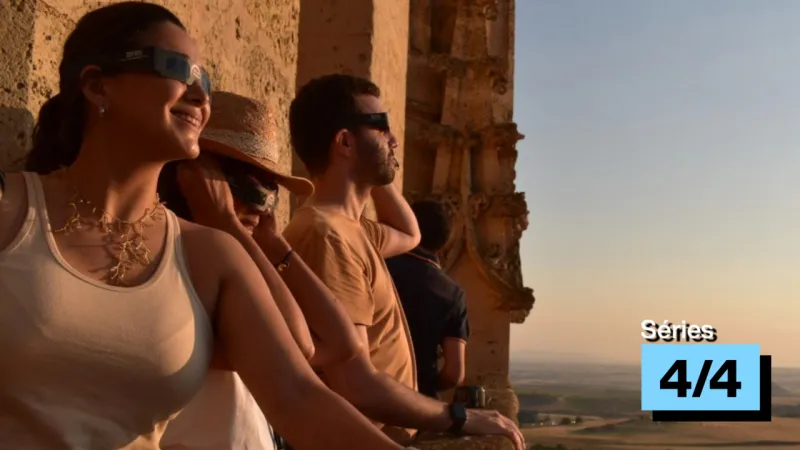
On August 12, 2026, a total solar eclipse swept across parts of Spain, plunging the historic city of Segovia into daytime darkness for 59 seconds. The event was visible from the city's iconic cathedral bell tower, where astronomers and spectators gathered to witness the rare celestial phenomenon.
The eclipse, which occurred in the late morning, was part of a path that crossed northern Spain, including cities like León and Zaragoza, before moving into the Mediterranean. According to the National Astronomical Observatory of Spain, the total phase lasted approximately 1 minute and 40 seconds at the point of greatest eclipse, but in Segovia, the duration was 59 seconds due to its location near the edge of the path.
Local authorities had organized special viewing events, and the cathedral opened its bell tower to the public for the occasion. The next total solar eclipse visible in Spain is expected in 2027, but this event was particularly notable for its visibility from a major historic landmark.
Observers reported a dramatic drop in temperature and the appearance of stars during the brief period of totality. The event drew thousands of tourists and astronomy enthusiasts to the region, boosting local tourism.