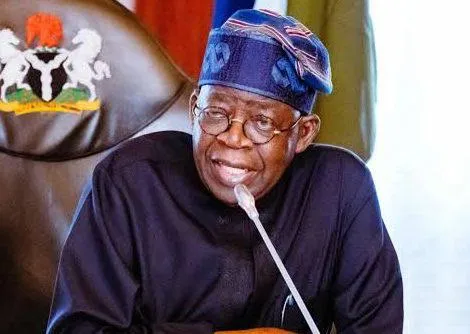
Nigerian President Bola Tinubu has renewed calls for comprehensive reform of the United Nations, emphasizing that the Security Council must be restructured to include permanent seats for Africa. Speaking at the 80th session of the UN General Assembly in New York, Tinubu argued that the current global governance architecture, established in 1945, is no longer fit to address contemporary challenges.
Tinubu stressed that Africa's exclusion from permanent representation on the Security Council undermines the body's legitimacy and effectiveness. He urged member states to support the Ezulwini Consensus, the African Union's longstanding position advocating for at least two permanent seats with veto power and five non-permanent seats for the continent.
The Nigerian leader also highlighted the need for reforms in other UN organs, including the General Assembly and the Economic and Social Council, to reflect current geopolitical realities. He called for a more inclusive and democratic multilateral system that addresses the concerns of developing nations.
Tinubu's remarks come amid growing momentum for UN Security Council reform, with various countries and blocs pushing for expansion and changes to the veto power held by the five permanent members: China, France, Russia, the United Kingdom, and the United States. However, achieving consensus on such reforms remains challenging due to competing national interests.