Super-Resolution Microsphere Lens Breaks Diffraction Limit
LIG Nanowise's SMAL lens achieves lateral resolution beyond the diffraction limit using microsphere technology.
May 13, 2026
1 min read
63 views
Source: azooptics.com
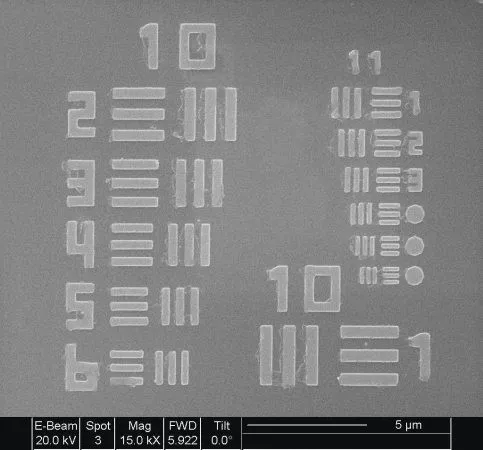
LIG Nanowise has developed the Super-Resolution Microsphere Amplifying Lens (SMAL), an optical device that captures lateral resolution beyond the diffraction limit of traditional microscopy. The lens uses microspheres to amplify evanescent waves, enabling imaging of sub-diffraction features.
In tests, the SMAL lens resolved features as small as 50 nanometers, surpassing the classical Abbe limit of ~200 nm for visible light. This breakthrough could enhance biological imaging and semiconductor inspection.
The technology is based on the microsphere nanoscopy principle, where dielectric microspheres collect near-field information and project it into the far field. LIG Nanowise has published results in peer-reviewed journals, confirming the resolution enhancement.
❓ Frequently Asked Questions
What is the diffraction limit in microscopy?
The diffraction limit, defined by Ernst Abbe, is the minimum distance two points can be resolved, typically ~200 nm for visible light.
How does the SMAL lens work?
The SMAL lens uses dielectric microspheres to collect evanescent waves from the sample and project them into the far field, enabling sub-diffraction resolution.
What resolution does the SMAL lens achieve?
The SMAL lens can resolve features as small as 50 nanometers, well below the classical diffraction limit.