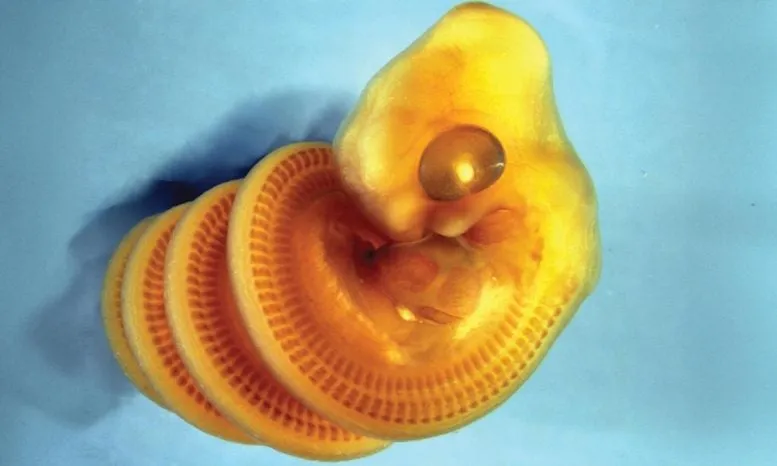
New research suggests that a mismatch in growth between a snake embryo's body and gut may explain why its first coils consistently turn to the right. As a snake embryo develops inside its egg, its elongating body curls into a spiral before it has muscles to move. The study indicates that this rightward coiling is not random but is driven by physical constraints arising from the different growth rates of the body and the gut.
The findings, published in a peer-reviewed journal, provide insight into the biomechanics of embryonic development. The researchers observed that the gut tube grows at a different pace than the surrounding body wall, creating internal stresses that bias the direction of coiling. This mechanical asymmetry leads to the consistent rightward spiral seen in snake embryos.
Understanding how physical forces shape embryonic form could have broader implications for developmental biology. The study highlights the interplay between genetics and mechanics in determining anatomical left-right asymmetry, a fundamental question in biology. Further research may explore whether similar mechanisms operate in other organisms.