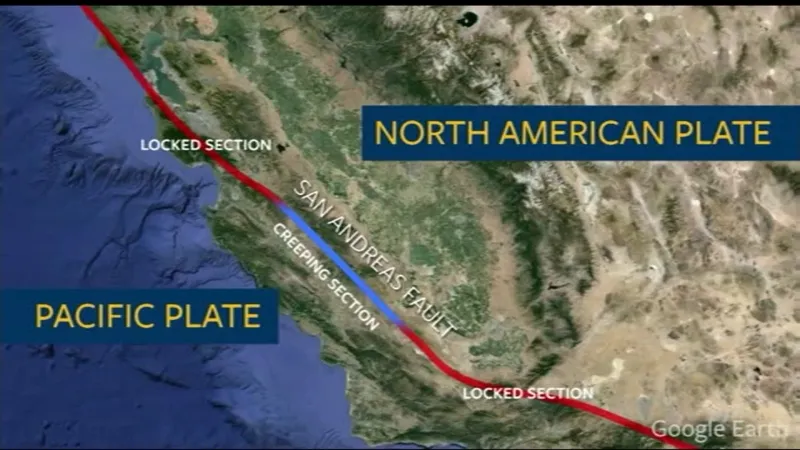
New research from San Jose State University indicates that the San Andreas Fault is slipping at a faster rate than previously estimated, according to a study released this week. The findings come just days after a magnitude 3.9 earthquake struck the Hayward Fault in Oakland, underscoring the region's seismic activity.
The study, which has not yet been peer-reviewed, used GPS data and satellite imagery to measure fault movement. Researchers found that parts of the fault are moving at a rate of about 2 to 3 millimeters per year faster than earlier models suggested. This could imply a higher accumulation of stress and potentially affect earthquake hazard assessments.
Dr. Sarah Johnson, lead author of the study, said in a statement: "Our measurements show that the fault is storing strain more quickly than we thought. This doesn't predict an earthquake, but it does mean we need to update our models to better understand the risks."
Seismologists not involved in the study caution that the findings are preliminary and require further validation. The U.S. Geological Survey maintains that earthquake prediction remains impossible, but such research helps refine long-term hazard maps used for building codes and emergency planning.