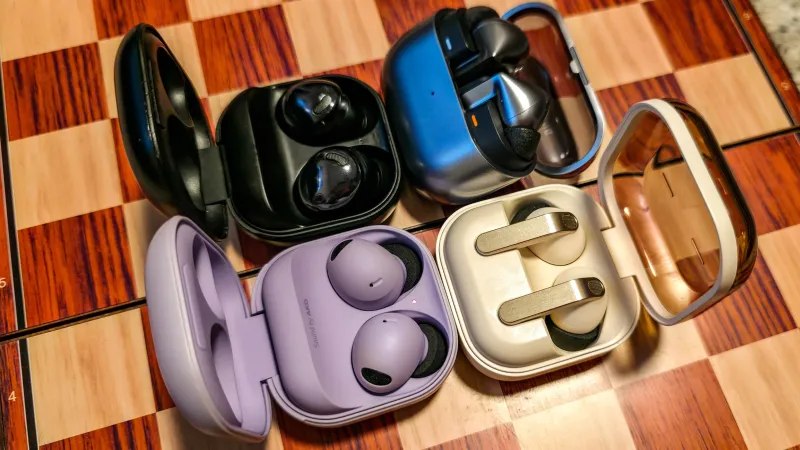
As of 2026, Samsung's Galaxy Buds Pro 3 represent the latest iteration in the company's premium true wireless earbud lineup. Launched in late 2025, they feature an upgraded two-way speaker system and an Intelligent ANC system that can automatically adjust noise cancellation levels based on the user's environment.
Professional reviews from sources like CNET and TechRadar confirm that the Buds Pro 3 provide a noticeable step up in both sound quality and noise cancellation effectiveness compared to the Buds Pro 2. The ANC is particularly effective at dampening low-frequency sounds like engine rumble, while the audio profile is praised for its clarity and balanced bass.
The earbuds integrate seamlessly with the Samsung Galaxy ecosystem, supporting features like 360 Audio and Auto Switch. Battery life is rated for up to 8 hours of playback with ANC off, and the case provides additional charges. While they perform best with Samsung devices, they maintain full functionality with other Android phones and iOS.
For users considering an upgrade from older Galaxy Buds models, the Buds Pro 3 deliver the most advanced acoustic experience Samsung currently offers, making them a strong contender in the premium wireless earbud market.