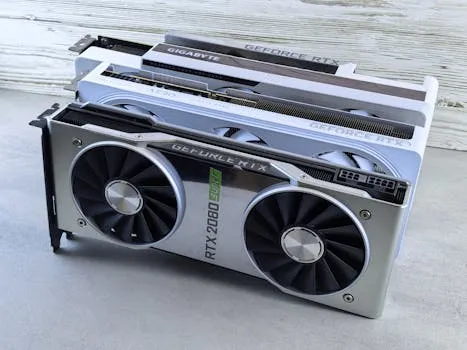
NVIDIA's GeForce RTX 5090, the company's flagship consumer graphics card released in early 2025, has demonstrated remarkable performance in password cracking benchmarks, reportedly outpacing high-end datacenter accelerators including NVIDIA's own H200 and AMD's MI300X. This finding, highlighted by cybersecurity researchers and data science analysts, underscores the growing computational power available in consumer-grade hardware.
Password cracking tools such as Hashcat leverage the massive parallel processing capabilities of modern GPUs. The RTX 5090, built on NVIDIA's Blackwell architecture, features a substantial increase in CUDA cores and memory bandwidth compared to its predecessor, the RTX 4090. These specifications translate directly into higher hash-rate performance when cracking common password hashing algorithms such as MD5, bcrypt, and NTLM.
The results raise important cybersecurity implications. As consumer GPUs become increasingly powerful, the time required to brute-force weak or moderately complex passwords continues to shrink. Security professionals warn that passwords which were considered adequately secure just a few years ago may now be cracked in a fraction of the time using off-the-shelf hardware.
Experts recommend that organizations and individuals adopt longer, more complex passphrases and ensure that password hashing algorithms with high computational cost — such as bcrypt, scrypt, or Argon2 — are used to store credentials. The gap between consumer GPU performance and enterprise security assumptions continues to narrow, making proactive password policy updates essential.