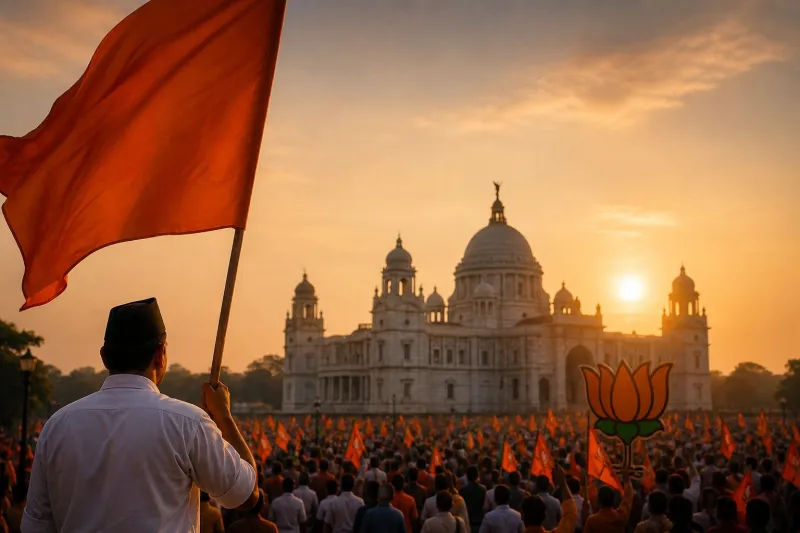
The Rashtriya Swayamsevak Sangh (RSS) conducted a decade-long, quiet, and decentralized mobilization in West Bengal, which significantly contributed to the Bharatiya Janata Party's (BJP) electoral gains in the state. This effort focused on reshaping social consciousness and voter behavior at the grassroots level, according to reports from The Indian Express and other sources.
The RSS's strategy involved establishing shakhas (local branches) in rural and urban areas, promoting cultural nationalism, and engaging in community service. This groundwork, which began well before the 2019 general elections, aimed to build a support base for the BJP by addressing local issues and fostering a sense of Hindutva identity.
By 2021, the BJP had become the main opposition in West Bengal, winning 77 seats in the state assembly, up from just 3 in 2016. The RSS's role was crucial in this transformation, as it helped the BJP expand beyond its traditional urban upper-caste base to include rural and lower-caste communities.
However, the BJP's rise in Bengal has been accompanied by increased political polarization and allegations of violence. The RSS's activities have been criticized by opposition parties for promoting a divisive agenda. As of May 2026, the BJP continues to build on this foundation, with the RSS maintaining its grassroots presence.