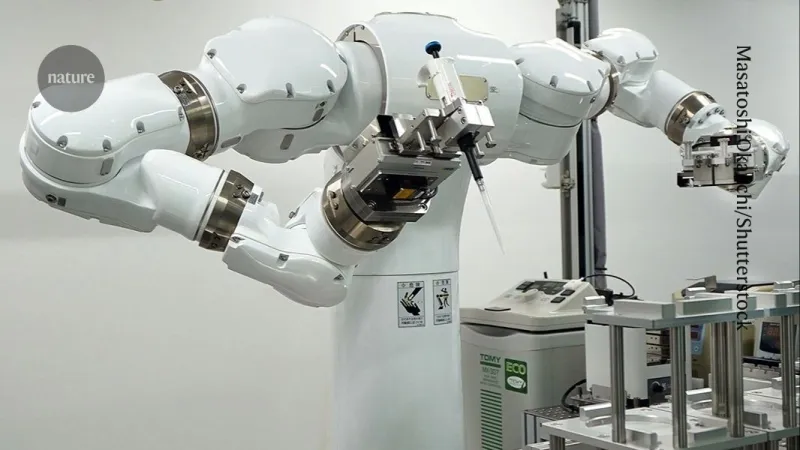
In a biology laboratory in Tokyo, ten robots with two arms each are conducting experiments, handling liquids, growing cells on plates, and operating scientific instruments. This is at the Robotics Innovation Center of the Institute of Science Tokyo (formerly Tokyo Institute of Technology and Tokyo Medical and Dental University).
The robots, developed by the company Robotic Biology Inc., are designed to automate repetitive tasks like pipetting and cell culture, allowing human researchers to focus on more creative and strategic aspects of science. The lab operates 24/7, with robots working through the night.
According to the institute, the system has been in development for several years and is now being used for real research projects, including drug discovery and synthetic biology. The robots can be controlled remotely via a web interface, enabling scientists to monitor experiments from anywhere.
This approach aims to increase reproducibility in experiments, as robots perform tasks with consistent precision. The lab is part of a broader trend in Japan to use automation to address labor shortages in research and industry.