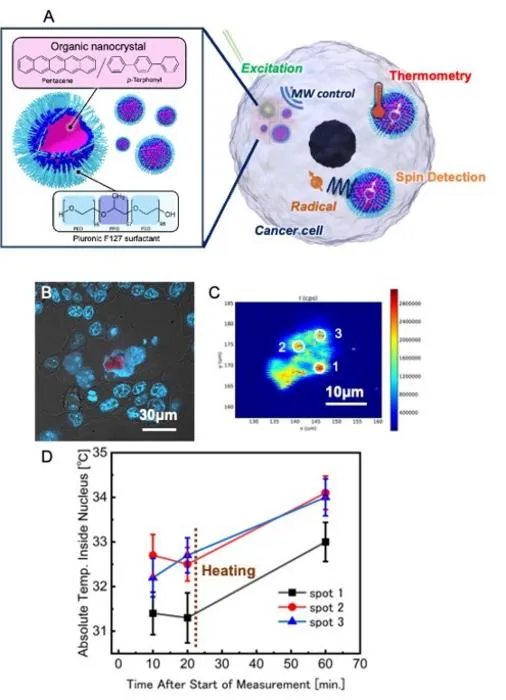
Researchers have developed molecular quantum nanosensors (MoQNs) that can operate inside the cytoplasm and nuclei of living cancer cells to map radical-generation processes and thermal dynamics linked to cancer-associated cellular physiology. The work was published in a peer-reviewed journal as of early 2026.
The nanosensors use quantum effects to detect minute temperature changes and free radical activity, which are key indicators of metabolic and signaling processes in cancer cells. By providing real-time, localized measurements, the technology could help researchers understand how cancer cells adapt to stress and treatment.
According to the study, the MoQNs are designed to be biocompatible and can be targeted to specific cellular compartments. This allows for precise monitoring of temperature variations that occur during radical generation, which is often dysregulated in cancer.
The development represents a step forward in nanoscale sensing for biomedical research, potentially enabling new insights into cancer biology and the evaluation of therapies that target cellular metabolism or oxidative stress.