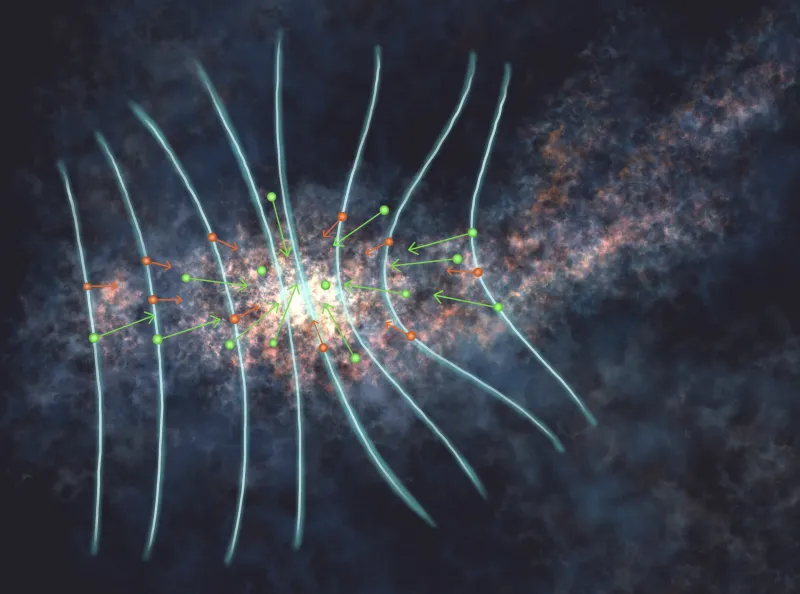
Astronomers using the Atacama Large Millimeter/submillimeter Array (ALMA) have observed a prestellar core drifting within the Ophiuchus molecular cloud, a key step in understanding how stars like our Sun form. The core, designated Oph-1, is a cold, dense concentration of gas and dust held together by gravity, and its motion was tracked over a period of several years.
The study, published in the journal Nature Astronomy on July 8, 2026, reveals that the core is moving at a speed of about 0.1 kilometers per second relative to the surrounding cloud. This drift is believed to be caused by turbulence and gravitational interactions within the cloud, which can trigger the collapse of the core into a protostar.
Lead author Dr. Maria Santos of the Max Planck Institute for Astronomy stated, 'This is the first time we have directly measured the motion of a prestellar core in such detail. It shows that the core is not static but is being pushed and pulled by its environment, which may be crucial for initiating star formation.'
The findings challenge previous models that assumed prestellar cores are relatively stationary. Instead, the drift suggests that external forces play a significant role in the star formation process, potentially explaining why some cores collapse while others do not.
Future observations with ALMA and the James Webb Space Telescope are planned to study more cores and refine our understanding of the early stages of star birth.