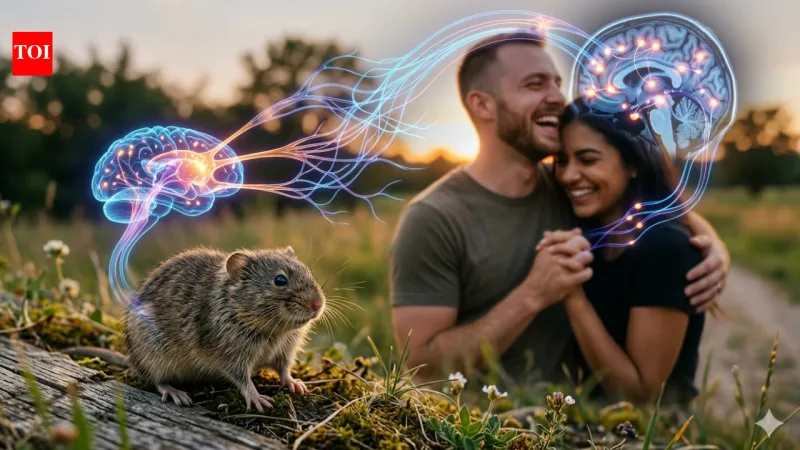
Love, a powerful human emotion, has long puzzled scientists. Recent research on prairie voles, small rodents from the American Midwest, provides key insights. These animals form lifelong pair bonds, similar to human romantic relationships, making them a model for studying the neurobiology of love.
Studies have identified that the hormones oxytocin and dopamine play crucial roles in pair bonding. In prairie voles, oxytocin receptors in the brain's reward system facilitate attachment, while dopamine reinforces the pleasure of social interaction. This mechanism is thought to be similar in humans, where these chemicals contribute to feelings of love and attachment.
Research published in journals like Nature and Science has shown that blocking oxytocin receptors in prairie voles prevents pair bonding, while stimulating them enhances it. These findings suggest that love is not just a cultural construct but has a biological basis rooted in brain chemistry.
While human love is more complex, involving cognition and culture, the vole studies offer a foundation for understanding disorders like social anxiety or autism, where bonding is impaired. The work continues to explore how these brain systems evolved.