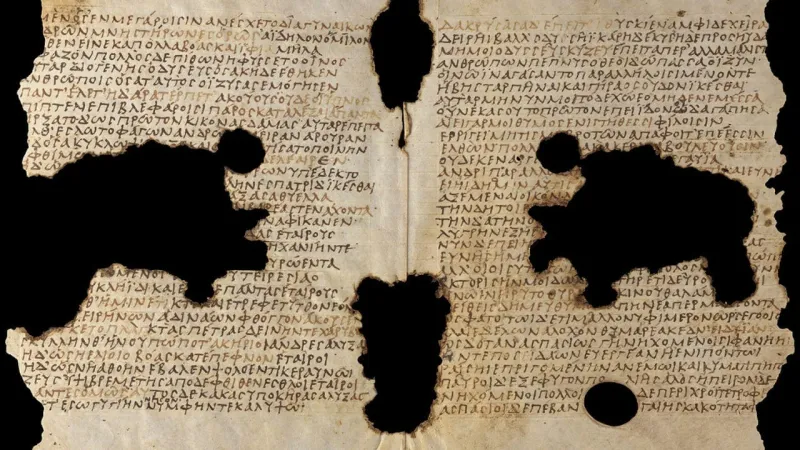
The oldest surviving copy of Homer's Odyssey in book form, known as the Manchester Odyssey, was displayed during a press tour for a film adaptation. The papyrus codex dates back to the third century BCE in Egypt, a period when scrolls were being replaced by bound books.
This artifact, housed at the University of Manchester's John Rylands Library, is a fragmentary manuscript containing parts of the epic poem. It is considered one of the earliest examples of a codex, the precursor to the modern book, and provides valuable insight into ancient bookmaking and literary transmission.
The press tour event highlighted the historical significance of the manuscript, connecting it to the enduring legacy of Homer's work. The film's production team emphasized the cultural importance of the Odyssey, which continues to inspire adaptations across media.
Scholars note that the Manchester Odyssey's survival is rare, as most early codices were lost due to the fragility of papyrus and the passage of time. Its exhibition aims to educate the public about ancient literary practices and the evolution of the book.