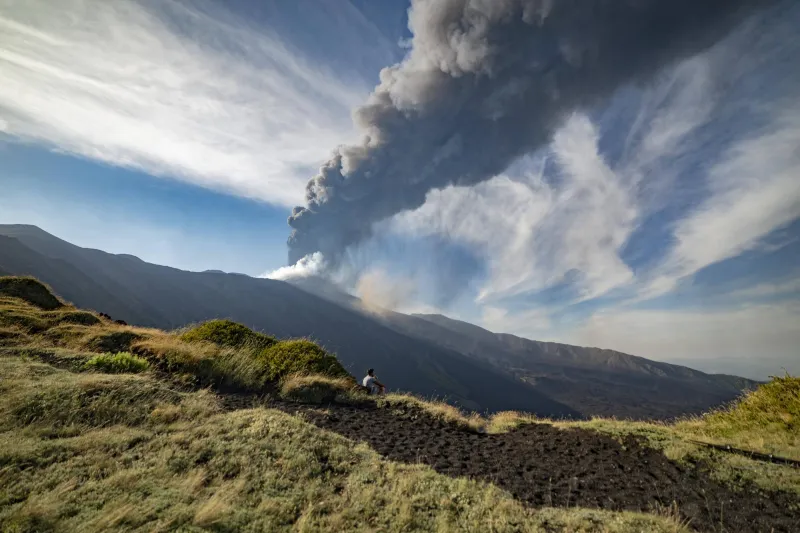
Recent travel and cultural features have explored the enduring connection between Homer's Odyssey and the Mediterranean's volcanic landscapes. One notable narrative traces Odysseus's legendary wanderings from Sicily to Sardinia, drawing a vivid parallel between Mount Etna and the one-eyed giant Polyphemus, whom Odysseus blinds in Book 9 of the epic.
Mount Etna, Europe's tallest active volcano, has long been identified in classical tradition as the site of Polyphemus's cave. The comparison emphasizes the volcano's towering, menacing presence and its eruptions, which ancient Greeks might have perceived as the rage of a giant. Modern travelers and writers often evoke this imagery to connect the region's natural history with its mythological heritage.
The route from Sicily to Sardinia reflects actual ancient maritime paths used by Greek colonists and traders. While no archaeological evidence confirms Odysseus's historical existence, the journey offers a way to experience the Mediterranean through the lens of one of Western literature's foundational texts. The article highlights how local guides and cultural initiatives use these myths to attract visitors and preserve regional stories.
As of August 2026, no new scientific findings have altered the understanding of Etna's geology or the mythological associations. The volcano remains active, with its last major eruption recorded in 2025, according to the Italian National Institute of Geophysics and Volcanology (INGV). The cultural narrative, however, continues to inspire books, tours, and documentaries that blend travel with classical scholarship.