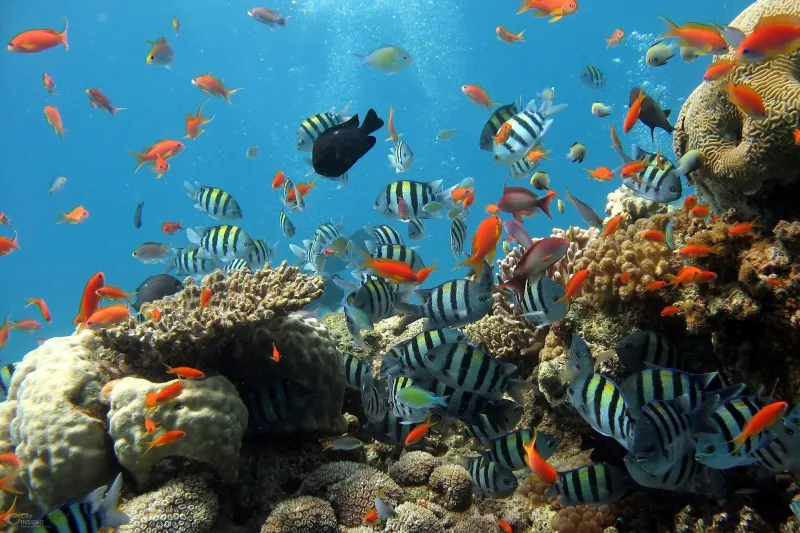
A new study from the University of Adelaide has found that ocean acidification, caused by increased carbon dioxide absorption, reduces the complexity of reef habitats. This leads fish to form smaller shoals, which offer less social protection against predators.
Researchers observed that in more acidic waters, reef structures become less intricate, forcing fish to adapt their social behaviors. The study, published in the journal Global Change Biology, highlights a previously overlooked impact of climate change on marine life.
Lead author Dr. Ivan Nagelkerken stated, 'When the habitat becomes simpler, fish lose their visual cues and safety in numbers, so they form smaller groups.' This change can increase individual predation risk and disrupt the ecological balance of reefs.
The findings underscore the urgent need to reduce carbon emissions to mitigate ocean acidification and protect marine ecosystems.