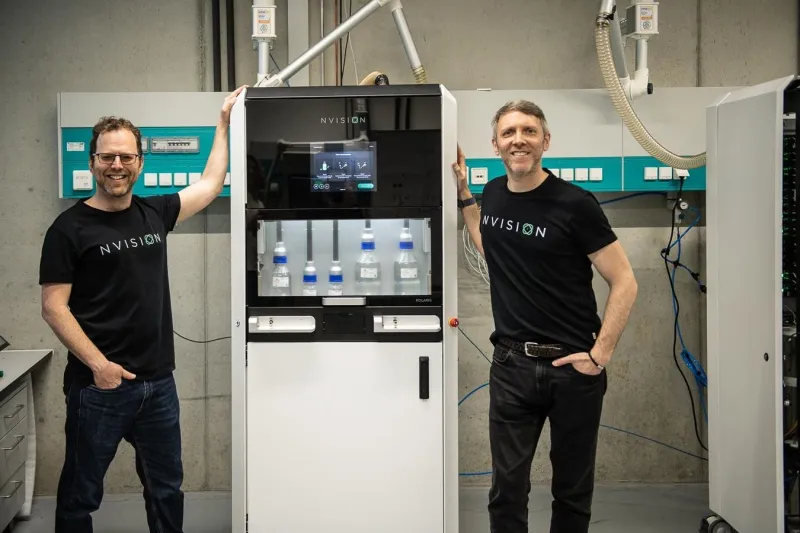
NVision Imaging Technologies, a startup developing real-time imaging technology to track how cancer responds to treatment, has raised $38 million in a funding round led by healthcare diagnostics giant Abbott. The company's technology uses hyperpolarized carbon-13 MRI to visualize metabolic activity in tumors, allowing doctors to see within minutes whether a therapy is working.
The funding will be used to scale up production of the company's imaging systems and expand clinical trials. NVision's approach aims to replace the current standard of waiting weeks or months to assess treatment response via traditional imaging like CT or PET scans.
According to the company, the technology has shown promise in early studies for prostate cancer and brain tumors. The system works by injecting a specially prepared, non-radioactive substance that is metabolized differently by cancer cells, enabling real-time tracking via MRI.
NVision was founded in 2018 and is based in Ulm, Germany, with operations in the United States. The company has raised over $100 million to date, including this latest round. Abbott's investment signals interest in integrating the technology into broader diagnostic workflows.
The company also plans to explore using its platform for drug development, potentially accelerating clinical trials by providing earlier readouts on drug efficacy. However, the technology is still investigational and not yet approved by regulators for routine clinical use.