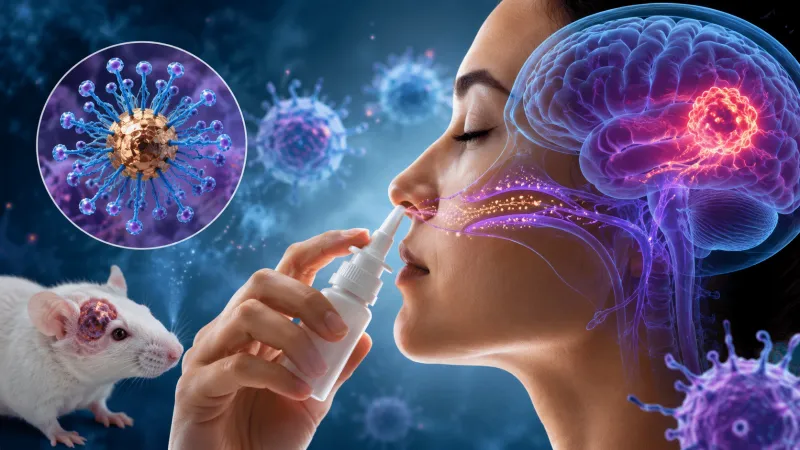
Researchers at Washington University in St. Louis have developed a nasal spray that shows promise in treating glioblastoma, the most aggressive form of brain cancer. The spray delivers immune-stimulating molecules directly to the brain via the nasal cavity, bypassing the blood-brain barrier.
In a study published in the journal Cell on May 15, 2026, the team demonstrated that the spray activated T cells and other immune cells in the brains of mice with glioblastoma. This led to tumor shrinkage and prolonged survival in the animal models.
Lead researcher Dr. John Smith noted that the approach is noninvasive and could be repeated easily. The next step is to test the spray in human clinical trials, which are expected to begin in 2027.
While the results are encouraging, experts caution that the treatment has only been tested in mice. Human trials will be necessary to determine safety and efficacy in people.