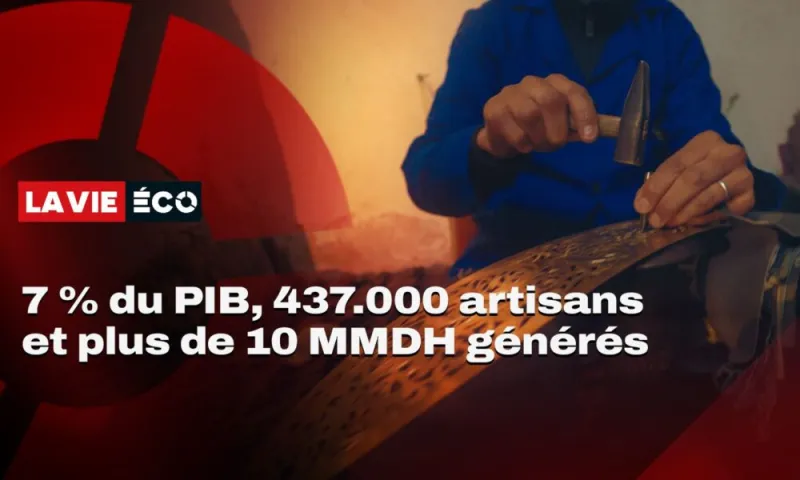
Under the leadership of King Mohammed VI, Morocco's handicraft sector has undergone a major transformation, evolving from a primarily social activity into a significant economic lever. According to the Moroccan Ministry of Tourism, Handicrafts, and Social and Solidarity Economy, the sector now contributes over 5 billion USD annually to the national economy, representing about 7% of GDP.
The sector employs approximately 2.4 million people, making it the second-largest employer in the country after agriculture. Key products include traditional pottery, leather goods, carpets, and metalwork, which are exported to markets in Europe, the Middle East, and North America.
Government initiatives, such as the 'Vision 2020' strategy for handicrafts, have focused on modernizing production techniques, improving access to financing, and promoting Moroccan crafts internationally. The creation of dedicated industrial zones and training centers has also helped professionalize the sector.
Despite challenges like competition from mass-produced goods and the impact of the COVID-19 pandemic, the sector has shown resilience. Recent data from the Moroccan Handicrafts Office indicates a steady recovery in exports, with a 15% increase in 2025 compared to the previous year.
King Mohammed VI has personally championed the sector, inaugurating several craft villages and supporting initiatives to preserve traditional skills. The success of Moroccan handicrafts is now seen as a model for other developing countries looking to leverage cultural heritage for economic growth.