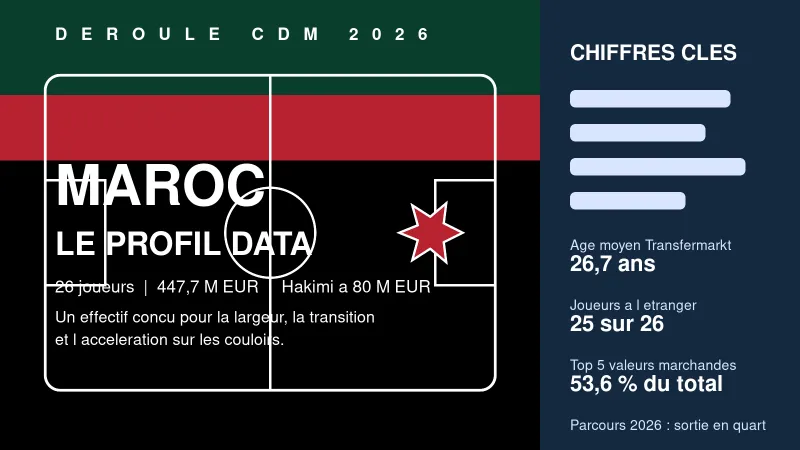
As of July 2026, Morocco's national football team has announced a squad for the 2026 FIFA World Cup that is heavily optimized for wing play, according to data analysis. The selection emphasizes speed and crossing ability from the flanks, reflecting a tactical shift under coach Walid Regragui.
Data from recent qualifiers and friendlies shows that Morocco generates over 40% of its attacking threats from wide areas, with full-backs and wingers averaging high numbers of crosses per game. Key players like Achraf Hakimi and Noussair Mazraoui are central to this strategy, providing both defensive solidity and offensive width.
The squad also includes several young talents known for their pace, such as Bilal El Khannouss and Abde Ezzalzouli, who have been integrated to exploit spaces in opponent defenses. This approach mirrors successful tactics used by top European clubs, adapted to Morocco's player strengths.
However, the reliance on wing play also presents vulnerabilities, as opponents may focus on blocking crossing lanes. Morocco's coaching staff has worked on alternative attacking patterns to ensure flexibility during the tournament.