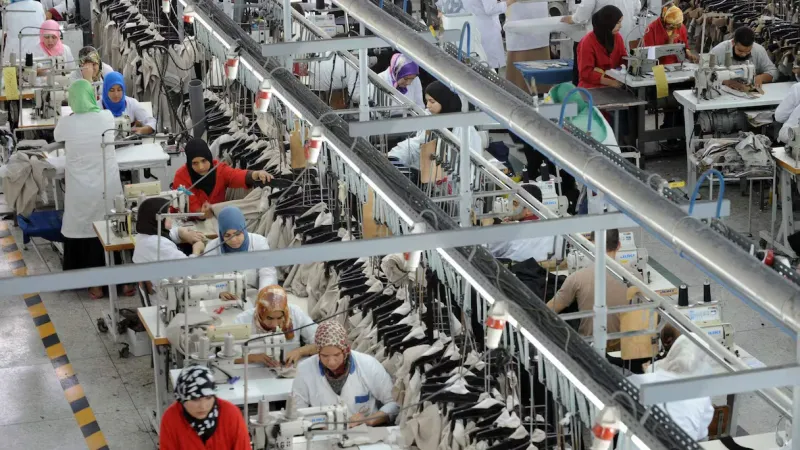
Morocco's clothing exports to the European Union declined by just 1.8% in the first quarter of 2026, according to data from the European Statistical Office (Eurostat). This modest decrease positions Morocco as one of the most resilient textile suppliers to the EU, as the broader European apparel market experienced a more significant contraction.
The overall EU clothing import market shrank by 5.2% during the same period, driven by reduced consumer spending and economic uncertainty across the continent. Morocco's performance contrasts sharply with major competitors: China's exports to the EU fell by 8.1%, while Bangladesh saw a 6.5% drop, and Turkey recorded a 4.3% decline.
Industry analysts attribute Morocco's relative stability to its geographic proximity to Europe, which enables faster delivery times and lower transportation costs, as well as its adherence to EU trade agreements that provide preferential tariff treatment. Additionally, Moroccan manufacturers have invested in sustainable production practices, aligning with European consumer demand for eco-friendly fashion.
The European textile sector faces ongoing challenges, including inflation, shifting consumer habits toward second-hand clothing, and increased regulatory pressure on environmental standards. However, Morocco's ability to maintain export volumes suggests a competitive advantage in the region.
Looking ahead, the Moroccan textile industry aims to further integrate into European supply chains by expanding high-value segments such as technical textiles and luxury apparel, which are less sensitive to price fluctuations.