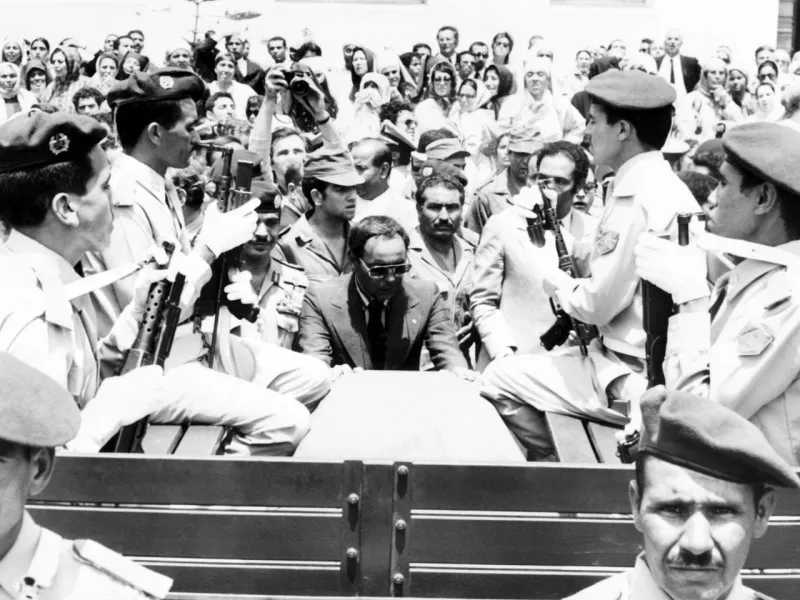
On July 10, 1971, a group of Moroccan military cadets launched a violent attack on a royal birthday party at Skhirat beach, near Rabat. The assault, which targeted King Hassan II and his guests, resulted in the deaths of hundreds of people, including foreign diplomats and Moroccan officials. The king survived by hiding in a nearby pavilion.
The coup attempt, often referred to as the "Skhirat coup," was orchestrated by General Mohamed Medbouh and Colonel M'hamed Ababou. The attackers, mostly cadets from the Ahermoumou military school, were motivated by grievances over corruption and inequality within the monarchy. After the initial attack, rebel forces also attempted to seize strategic locations in Rabat, including the radio station and the royal palace.
The rebellion was suppressed within hours by loyalist troops led by General Mohamed Oufkir. In the aftermath, dozens of military personnel were arrested, tried, and executed. The event is considered a turning point in Morocco's modern history, leading to increased security measures and political repression under Hassan II's rule.
Today, the Skhirat coup is remembered as a tragic episode in Morocco's past. It is often compared to the 1972 "coup of the aviators," when Moroccan Air Force planes attacked the king's Boeing 727. Both events highlight the fragility of political stability in the region during that era.