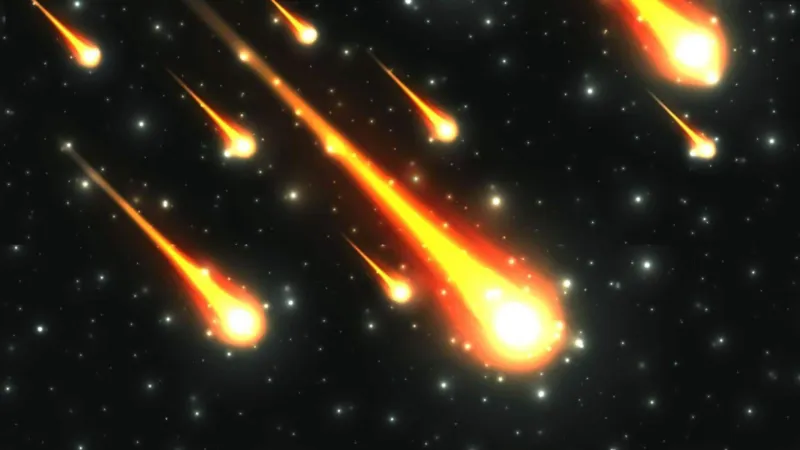
Meteor showers, while visually stunning, present a real hazard to spacecraft and satellites. According to NASA, approximately 48.5 tons of meteoroid material enters Earth's atmosphere daily, ranging from tiny micrometeoroids to larger particles that create shooting stars. This constant influx of debris poses a collision risk for both crewed and uncrewed missions.
The threat is not just from natural meteoroids. Space agencies also track human-made orbital debris, which travels at high velocities and can cause catastrophic damage. The European Space Agency estimates there are over 36,500 debris objects larger than 10 cm in orbit, with millions of smaller pieces. Collisions with even a small particle can cripple a satellite or puncture a spacecraft hull.
For future missions to the Moon, Mars, and beyond, understanding and mitigating meteoroid impacts is critical. NASA's Meteoroid Environment Office monitors meteoroid fluxes and develops models to predict risks. Spacecraft can be shielded with materials like Whipple shields, which break up impacting particles, or by using active avoidance maneuvers when a dense meteoroid stream is predicted.
As space traffic increases, the combination of natural meteoroids and human-made debris will require enhanced tracking and protective measures. International cooperation and advanced detection systems are essential to ensure the safety of astronauts and the longevity of space assets.