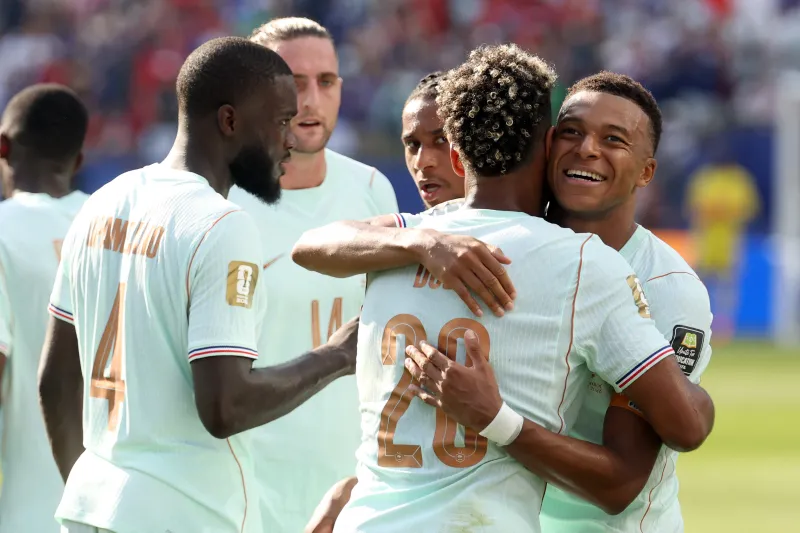
During the 2022 FIFA World Cup semi-final between France and Morocco, a controversial moment occurred when Kylian Mbappé scored a goal that was initially questioned due to a potential handball by Adrien Rabiot in the buildup. The goal was ultimately allowed after a VAR review.
The incident happened in the 79th minute when Rabiot, attempting to control the ball, saw it strike his arm before the ball fell to Mbappé, who then scored. The referee, César Arturo Ramos, consulted the VAR and decided to validate the goal based on the interpretation that Rabiot's handball was not deliberate and occurred in a natural position.
According to IFAB rules, a handball is only penalized if the player deliberately touches the ball with their hand/arm, or if the arm is in an unnatural position making the body unnaturally bigger. In this case, the referee deemed Rabiot's arm was in a natural position as he turned, and the contact was accidental, thus not a foul.
The goal stood, and France won the match 2-0, advancing to the final. The decision sparked debate among fans and pundits, but the referee's explanation aligned with the current interpretation of the handball rule.