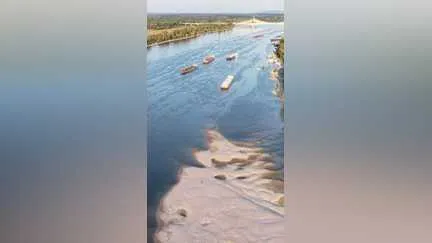
Severe drought conditions across the Balkans have caused the Danube River to recede, revealing a remarkable find: the remains of a mammoth on a sandbar near the Serbian village of Kostolac. The discovery was made in late July 2026, according to local media reports.
Archaeologists from the nearby Viminacium archaeological park, a former Roman city, were alerted to the bones and confirmed they belong to a mammoth. The site is rich in prehistoric and Roman history, making the discovery significant for the region.
Experts believe the mammoth lived during the Pleistocene epoch, though the exact age is yet to be determined. The bones are well-preserved, and researchers are planning a careful excavation to recover the skeleton for further study.
This is not the first such find in the area; previous droughts have exposed mammoth remains in the same stretch of the Danube. The current discovery highlights how climate-related water level changes can uncover hidden archaeological treasures.