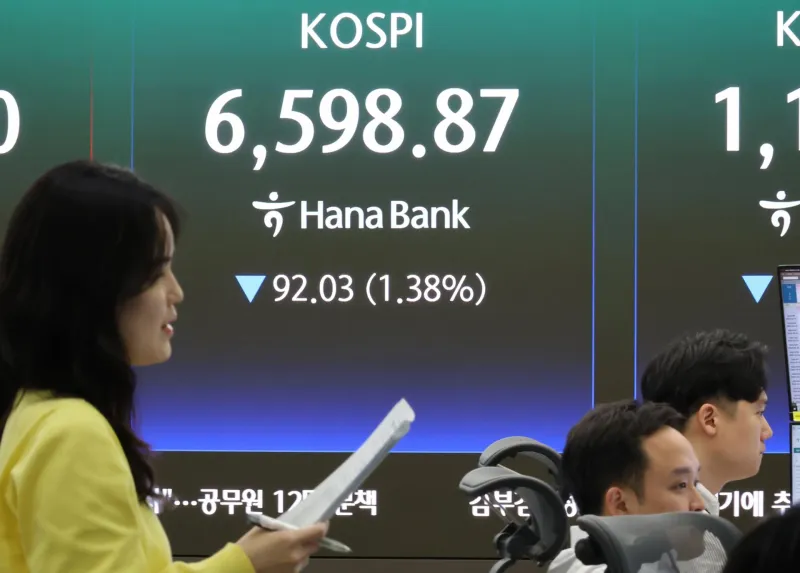
South Korea's benchmark KOSPI index briefly rose above the 6,750 mark on Thursday, April 30, 2026, reaching a new intraday high before reversing gains to close 1.38% lower. The decline ended a three-day winning streak, driven by a surge in global oil prices that weighed on investor sentiment.
According to market data, the KOSPI closed at 6,632.45, down 92.78 points from the previous session. The intraday high of 6,751.23 was the highest level ever recorded for the index, but profit-taking and concerns over rising energy costs triggered a sell-off in the afternoon.
Oil prices climbed sharply on the day, with Brent crude futures rising above $85 per barrel, amid supply concerns and geopolitical tensions. The rise in oil prices negatively impacted sectors such as transportation and manufacturing, which are sensitive to fuel costs.
Foreign investors were net sellers on the KOSPI, offloading approximately 340 billion won ($255 million) worth of shares, while institutional investors also reduced their holdings. Retail investors, however, were net buyers, providing some support to the market.
The KOSPI's performance reflects ongoing volatility in global markets, as investors weigh the impact of higher commodity prices on economic growth. Analysts suggest that the index may face further headwinds if oil prices continue to rise.