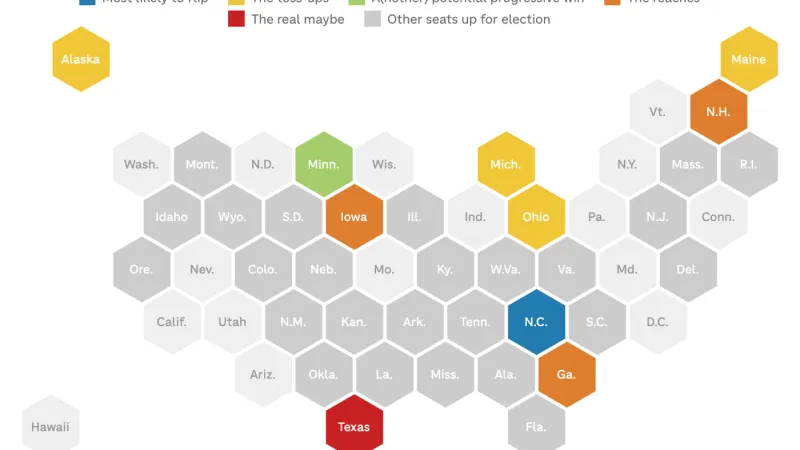
As of July 27, 2026, the battle for control of the U.S. Senate in the 2026 midterm elections is intensifying. Democrats need to flip at least one seat to gain a majority, given the current 50-50 split with Vice President Kamala Harris as the tiebreaker. Key races include Pennsylvania, where Democratic Senator John Fetterman is defending his seat against a Republican challenger, and Wisconsin, where Republican Senator Ron Johnson is retiring, creating an open seat. North Carolina also features a competitive open race due to Republican Senator Thom Tillis's retirement.
In Pennsylvania, Fetterman faces a tough challenge from Republican candidate Dave McCormick, a former hedge fund CEO. The race is considered a toss-up by most analysts, with both candidates raising significant funds. In Wisconsin, the open seat has attracted a crowded field, including Democratic Lieutenant Governor Mandela Barnes and Republican businessman Eric Hovde. The outcome could hinge on turnout in suburban Milwaukee and rural areas.
Other battlegrounds include Arizona, where Democratic Senator Mark Kelly is seeking re-election against Republican Kari Lake, a former TV news anchor, and Nevada, where Democratic Senator Catherine Cortez Masto faces a challenge from Republican Sam Brown, a retired Army captain. Both races are expected to be close, with control of the Senate likely coming down to a few key states.
Primaries are ongoing, with several states holding elections in August and September. The final map will depend on candidate nominations and shifting voter sentiment. As of now, no party has a clear advantage, making the 2026 midterms one of the most unpredictable in recent history.