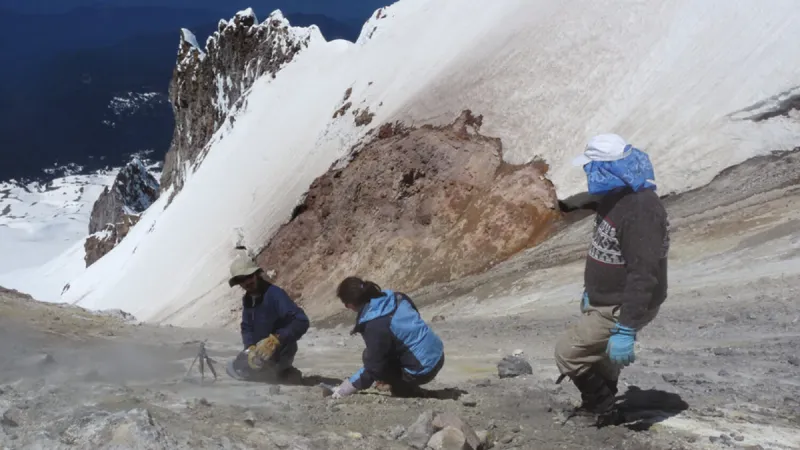
Hydrothermal heat flow serves as a critical indicator of magmatic activity beneath volcanic arcs, where magma from the Earth's mantle supplies heat to the crust. This heat is dissipated through processes including hydrothermal circulation, conduction, and advection. A study published in AGU's Editors' Vox blog highlights how measuring heat flow can help scientists understand the distribution and cooling of subsurface magmas.
According to the article, much of the magmatic heat in arc crust is transferred to hydrothermal systems, which then release it at the surface. By analyzing heat flow patterns, researchers can infer the depth and volume of magma bodies, as well as the efficiency of heat transport. This approach provides a non-invasive method to monitor volcanic systems and assess potential hazards.
The study emphasizes that hydrothermal heat flow measurements are particularly valuable in regions where direct magma sampling is difficult. These data can improve models of crustal thermal evolution and help predict volcanic eruptions. The research underscores the importance of integrating geophysical and geochemical observations to better understand arc magmatism.