Recent research in robotics has demonstrated that a hybrid optimization algorithm can significantly improve path planning for multiple autonomous robots operating in shared spaces like warehouses. The approach refines the Pelican Optimization Algorithm (POA) by incorporating chaotic mapping for better initial population distribution and firefly algorithm disturbance strategies to escape local optima.
This enhanced algorithm, often tested in simulation environments for Visual Simultaneous Localization and Mapping (VSLAM)-based robots, aims to solve the complex problem of collision-free and efficient path planning for fleets. The goal is to maximize the overall success rate of obstacle avoidance (OA) and minimize total travel time or distance for collaborative tasks in indoor logistics.
Studies, including one published in 'Scientific Reports' in 2024, confirm that such metaheuristic hybrids can outperform standard algorithms in convergence speed and solution quality for multi-robot path planning (MRPP). The integration of chaotic maps helps in exploring the search space more thoroughly at the start, while the firefly-inspired perturbations prevent the algorithm from settling on sub-optimal paths.
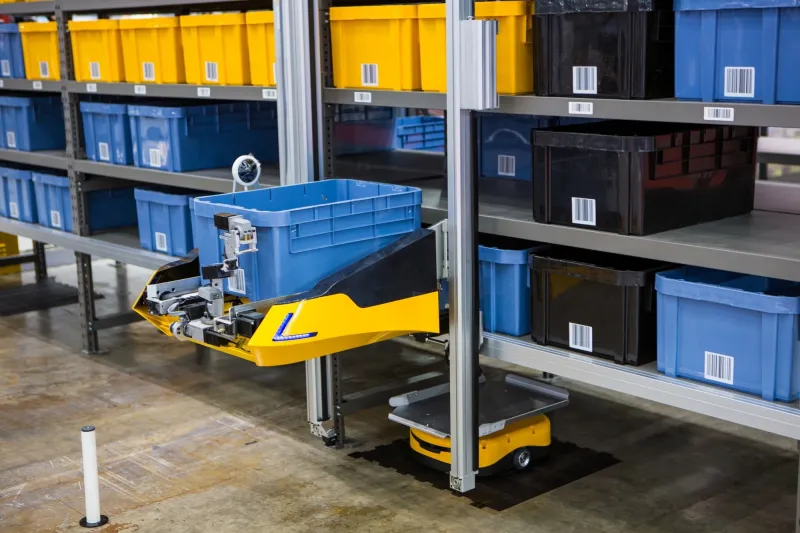
The primary application is in automated warehouses and manufacturing plants, where efficient robot coordination is critical for throughput. While promising in simulation, real-world deployment faces challenges like dynamic obstacles, sensor noise, and the need for real-time computational performance, which remain active areas of engineering research.