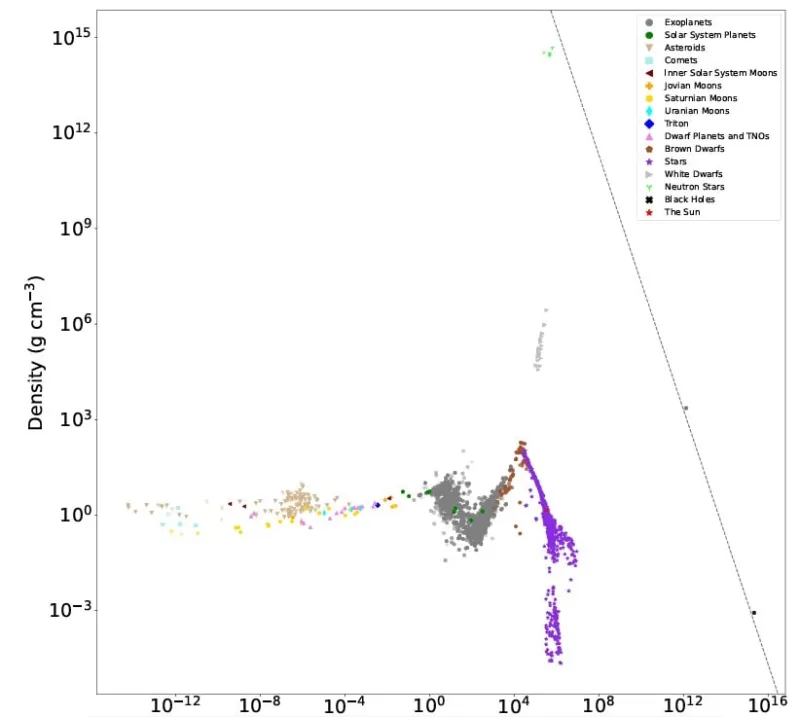
The Hertzsprung-Russell (HR) diagram is a fundamental tool in astronomy that plots stars' temperature (or spectral type) against their luminosity (or absolute magnitude). First developed independently by Ejnar Hertzsprung and Henry Norris Russell around 1910, it reveals distinct patterns: most stars lie along the main sequence, while giants, supergiants, and white dwarfs occupy separate regions.
According to NASA and the European Space Agency, the diagram helps astronomers understand stellar evolution—how stars change over time. For example, our Sun, a main-sequence star, will eventually become a red giant and then a white dwarf, following a path mapped by the HR diagram.
Recent studies using data from the Gaia spacecraft have refined the HR diagram for millions of stars, providing precise distances and luminosities. This has allowed scientists to test models of stellar structure and evolution with unprecedented accuracy.