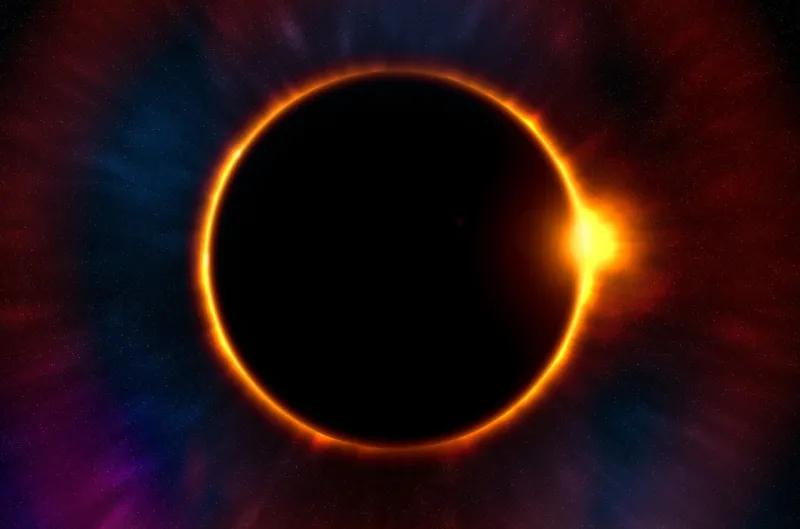
On August 12, 2026, a total solar eclipse will cross parts of Europe, including Spain and Iceland, and will be visible as a partial eclipse in France and other regions. Millions of people are expected to look up at the sky, but eye care professionals warn that staring at the Sun without proper protection can cause permanent retinal damage.
According to the American Astronomical Society (AAS) and the World Health Organization, the only safe way to view a solar eclipse directly is through eclipse glasses or handheld solar viewers that meet the ISO 12312-2 international safety standard. Regular sunglasses, even very dark ones, are not safe because they do not block the harmful infrared and ultraviolet radiation.
Experts also advise against using cameras, binoculars, or telescopes without special solar filters, as these can magnify the Sun's rays and damage both the eyes and the equipment. For those who do not have certified glasses, indirect viewing methods, such as pinhole projectors, are a safe alternative.
The eclipse will begin in the morning and last for several hours, with the total phase lasting up to about two minutes in the path of totality. In France, the partial eclipse will be visible from around 11:00 AM to 1:30 PM local time, depending on the location.
Remember: never look directly at the Sun without proper protection, even during a partial eclipse. Plan ahead and get your certified eclipse glasses from reputable suppliers to enjoy this rare celestial event safely.