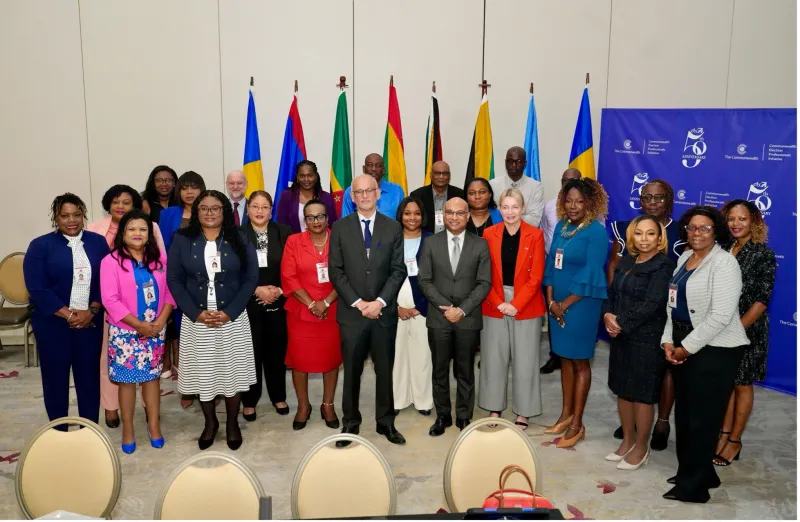
The Commonwealth Secretariat, in partnership with Trinidad and Tobago's Elections and Boundaries Commission (EBC), has concluded a five-day regional training on Artificial Intelligence and Electoral Integrity. The event, held in Port of Spain, brought together election management officials from across the Caribbean to examine the risks and opportunities AI presents for democratic processes.
The training coincided with the 50th anniversary of the EBC, which was established in 1976. Sessions focused on practical strategies to counter AI-driven disinformation, deepfakes, and cyber threats that could undermine public trust in elections. Participants also explored how AI tools could be used ethically to improve voter registration and electoral administration.
Commonwealth Secretary-General, the Rt Hon Patricia Scotland KC, emphasized the need for proactive measures, stating the training aimed to equip officials with the knowledge to 'harness the benefits of AI while mitigating its risks.' The initiative is part of the Commonwealth's broader work to support member countries in adopting the Commonwealth Cyber Declaration and the Commonwealth Electoral Integrity Initiative.