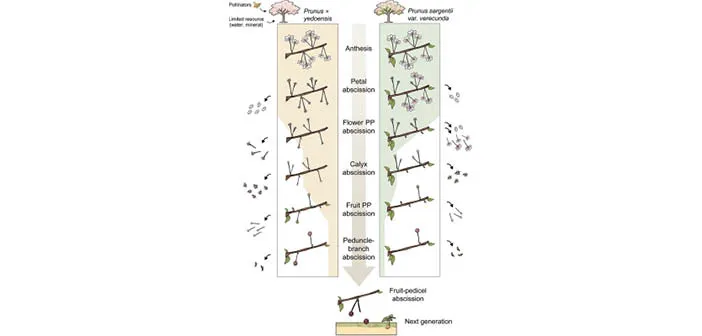
Researchers have identified the genetic mechanisms behind abscission in cherry trees, the process by which trees selectively shed fruits. A study published in Nature Communications on March 12, 2026, pinpointed specific genes that regulate fruit drop, offering insights into how trees allocate resources.
The team, led by scientists at the University of California, Davis, used RNA sequencing to compare gene expression in cherry fruits that abscised versus those that remained. They found that genes involved in ethylene signaling and cell wall degradation were upregulated in dropping fruits, while auxin-related genes were suppressed.
This research moves beyond model plants like Arabidopsis, providing direct evidence in a fruit tree. The findings could help breeders develop cherry varieties with reduced fruit drop, improving yield. The study was funded by the USDA National Institute of Food and Agriculture.