BRICS vs Bretton Woods: Gradual Financial Shift
BRICS nations are gradually reshaping global finance, challenging the Bretton Woods system with new institutions and currency initiatives.
May 31, 2026
1 min read
25 views
Source: sundayguardianlive.com
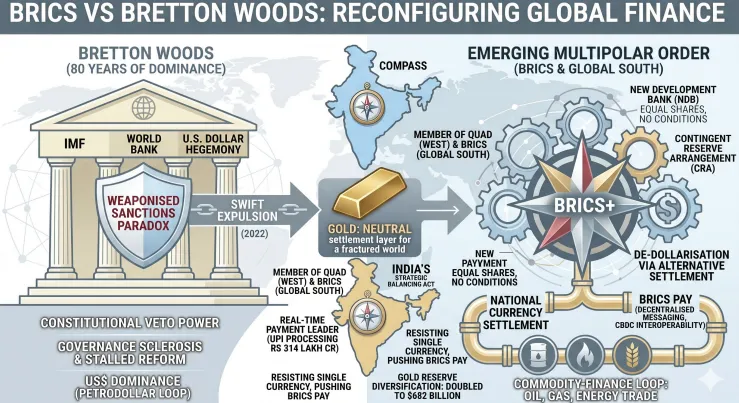
Image: sundayguardianlive.com
The BRICS group—Brazil, Russia, India, China, and South Africa—is pursuing a gradual reconfiguration of the global financial architecture, challenging the dominance of the Bretton Woods institutions (IMF and World Bank). This shift is driven by the creation of the New Development Bank (NDB) and efforts to increase use of local currencies in trade.
As of 2026, the NDB has approved over $30 billion in loans for infrastructure and sustainable development projects, primarily in member countries. The bank aims to reduce reliance on the US dollar and provide alternatives to Western-led financial systems.
BRICS nations are also exploring a common currency or enhanced payment systems to facilitate cross-border transactions. However, experts note that the process is incremental and faces significant hurdles, including political differences among members and the entrenched position of the dollar.
❓ Frequently Asked Questions
What is the New Development Bank?
The New Development Bank (NDB) is a multilateral development bank established by BRICS nations in 2014 to finance infrastructure and sustainable development projects, offering an alternative to the IMF and World Bank.
Are BRICS countries creating a common currency?
BRICS members have discussed a common currency or enhanced payment systems to reduce dollar dependence, but no concrete plans have been implemented as of 2026.
How does BRICS challenge the Bretton Woods system?
BRICS challenges the Bretton Woods system by creating alternative financial institutions like the NDB and promoting local currency trade, gradually reducing reliance on the US dollar and Western-led financial frameworks.