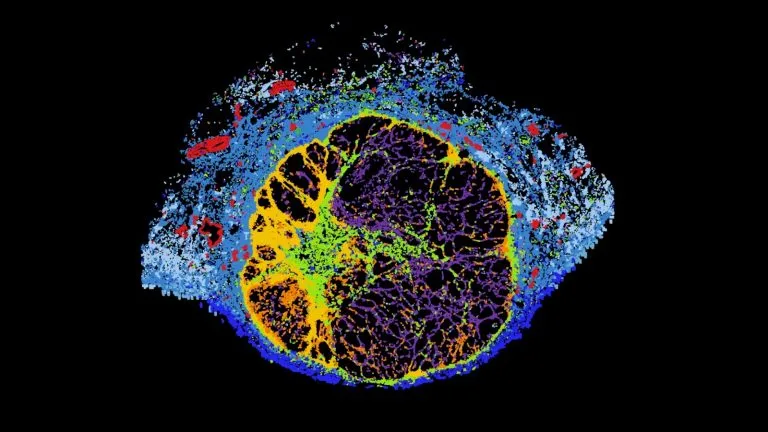
A new blood test can reveal the spatial organization of cells within tumors, known as 'neighborhoods,' and predict how patients will respond to immunotherapy, according to a study published in Nature on May 6, 2026.
The research, led by senior authors Newman and Aadel Chaudhuri, MD, PhD, a professor of radiation oncology at the Mayo Clinic in Rochester, Minnesota, and first author Wubing Zhang, PhD, a postdoctoral scholar, demonstrates that analyzing cell-free DNA from blood samples can identify distinct cellular microenvironments in tumors.
These 'neighborhoods' of cells influence tumor behavior and immune evasion. The test, which uses a technique called 'cell-free DNA fragmentomics,' could help doctors determine which patients are likely to benefit from immunotherapy, a treatment that harnesses the immune system to fight cancer.
The findings were based on analysis of blood samples from patients with various cancers. The authors emphasize that further validation in larger clinical trials is needed before the test can be widely used in clinical practice.