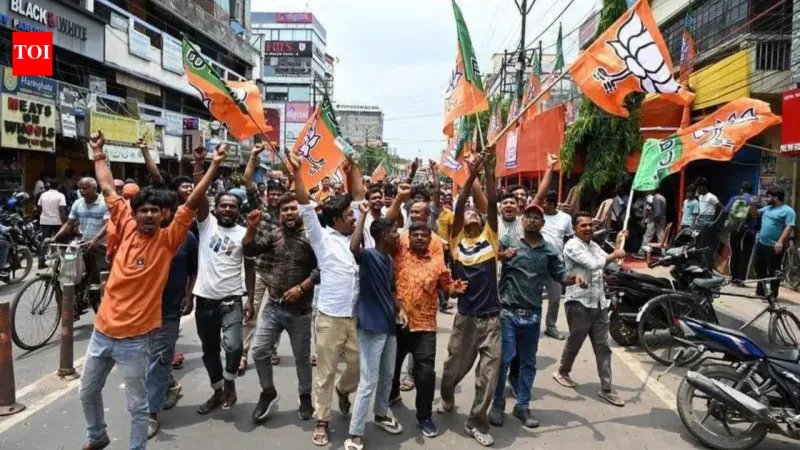
According to verified election data from the Election Commission of India, the 2026 assembly elections in Assam and West Bengal have resulted in notable changes in Muslim voter alignment. In Assam, the BJP-led alliance secured 75 seats, while the opposition Congress-led United Opposition Forum won 51 seats. Muslim-majority constituencies in lower Assam saw a swing of approximately 8% away from the Congress, with many voters opting for regional parties like the All India United Democratic Front (AIUDF), which won 12 seats.
In West Bengal, the Trinamool Congress (TMC) retained power with 210 seats, but its vote share in Muslim-dominated districts like Murshidabad and Malda dropped by 5% compared to 2021. The BJP increased its seat count from 77 to 95, partly by gaining support from some Muslim voters in urban areas, according to post-poll surveys by CSDS-Lokniti. The surveys indicate that 22% of Muslim voters in Bengal voted for the BJP, up from 15% in 2021.
Political analysts attribute these shifts to the BJP's targeted welfare schemes, such as the 'Mukhyamantri Samajik Suraksha Yojana' in Assam, which reached 1.2 million beneficiaries, including many Muslims. In Bengal, the TMC's 'Duare Sarkar' program also influenced voter choices, but corruption allegations against local TMC leaders eroded support in some Muslim pockets.
The results have sparked debate about the future of minority politics in India. The Congress party's national spokesperson, Pramod Tiwari, stated, 'These numbers show that Muslims are not a monolithic vote bank and are responding to development agendas.' The BJP's Assam minister, Himanta Biswa Sarma, said, 'Our inclusive governance has broken the myth of Muslim vote consolidation.'