A remarkable archaeological discovery has been made on the Isle of Arran, where a stone circle, hidden for centuries beneath peat on Machrie Moor, has been uncovered. The site, located on the west coast of Arran, is part of a rich landscape of Neolithic and Bronze Age monuments.
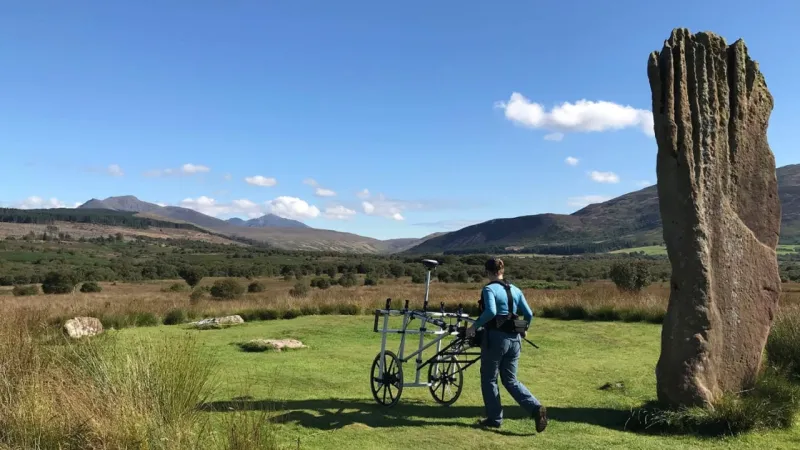
The stone circle was detected using advanced geophysical survey techniques, including ground-penetrating radar, which revealed the outline of the buried stones. Archaeologists from the University of Glasgow and local heritage groups collaborated on the project, which aims to map and understand the prehistoric landscape of Machrie Moor.
The newly discovered circle is believed to date from around 3000 to 2000 BCE, placing it in the late Neolithic or early Bronze Age. It consists of several upright stones, some of which may have been deliberately toppled or buried over time. The site adds to the known complex of stone circles, standing stones, and cairns on Machrie Moor, which has been a focus of archaeological study for decades.
Experts say the discovery highlights the potential for further hidden monuments in the area and underscores the importance of non-invasive survey methods in archaeology. The team plans to conduct further analysis and possibly a limited excavation to confirm the circle's full extent and date.