The year 1936 was pivotal in European history. In France, the Popular Front government, led by Léon Blum, implemented significant social reforms, including the 40-hour workweek and paid vacations, which were celebrated as major victories for workers.
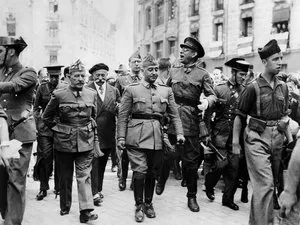
Meanwhile, in Spain, the Spanish Civil War broke out in July 1936 after a military coup against the democratically elected Republican government. Nazi Germany and Fascist Italy quickly provided military support to the Nationalist forces led by General Francisco Franco, while the Soviet Union aided the Republicans.
The intervention of fascist powers in Spain was seen by many contemporaries as a precursor to a broader European conflict. The war became a proxy battleground for ideological struggles, drawing international volunteers to fight against fascism.
Historians note that the Spanish Civil War foreshadowed World War II, as the same fascist powers that intervened in Spain would later invade other countries. The conflict also highlighted the divisions within Western democracies, which pursued a policy of non-intervention despite the obvious aggression.