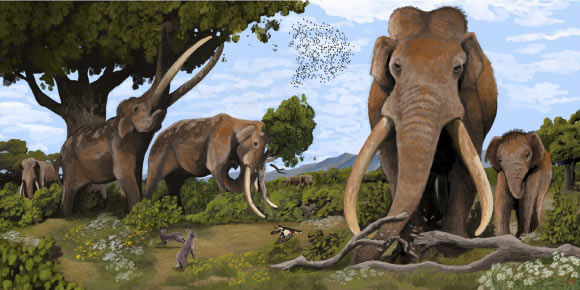
New research provides the first direct evidence that Neanderthals hunted and butchered giant straight-tusked elephants (Palaeoloxodon antiquus), which were the largest land mammals of the last 800,000 years. The study, published in the journal Science Advances, analyzed remains from the 125,000-year-old site of Neumark-Nord in Germany.
Chemical analysis of strontium isotopes in the elephants' teeth revealed the animals were local to the region, contradicting earlier theories of long-distance migration. This finding suggests Neanderthals were targeting local populations of these massive creatures, which could weigh up to 13 metric tons and provide enough food for weeks.
The archaeological evidence shows cut marks on bones and selective butchering patterns, indicating systematic processing by large groups of Neanderthals. This challenges previous assumptions about their social structures, suggesting they had the capacity for coordinated, large-scale hunting and food storage.
Researchers estimate that a single adult elephant could have fed about 100 Neanderthals for a month. This discovery significantly alters our understanding of Neanderthal subsistence strategies, group size, and social complexity during the Last Interglacial period in central Europe.